Why Your AI Baby Photo Looks Off — And How to Fix It
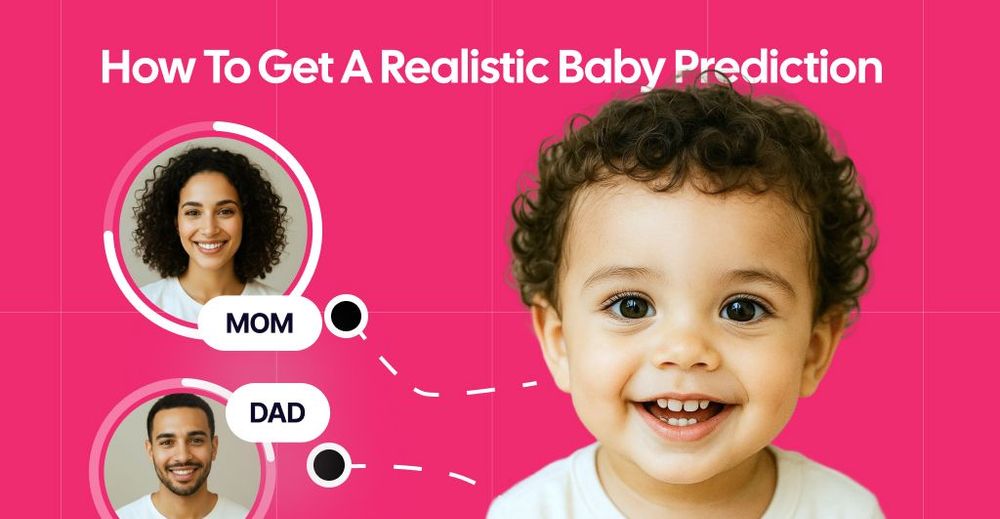
Illustrations are AI-generated
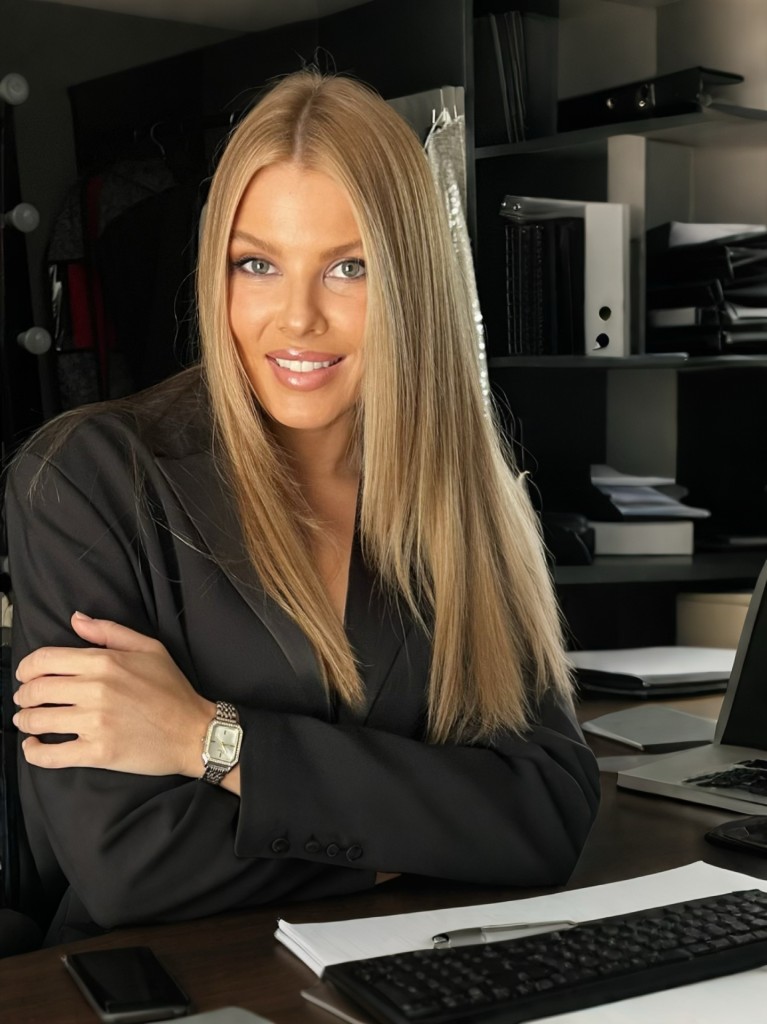
Nine times out of ten the problem isn't the AI baby generator. It's the photo you fed it. Front-facing, evenly lit, both eyes visible, no sunglasses and no group shot — get those right and the result changes more than switching tools ever will. Below is what each rule fixes, and what a bad photo does to the face.
A face turned three-quarters away, a shadow across one cheek, sunglasses pushed up into the hair — any of these and the model has to guess at features it can't see. It will guess. That's why the baby comes out looking like neither of you.
This page explains what our AI baby generator does with your upload, which five things change the result, and what it can't do no matter how good your photo is.
What happens to your photo before the AI sees it
Worth knowing, because it changes what "a good photo" means here.
Your image is resized so the long side is 1024 pixels, then converted to JPEG. That happens in the browser, before anything is uploaded. The file limit is 2 MB per photo.
So a 12-megapixel portrait from your phone gets downscaled like everything else. Uploading a bigger file doesn't buy you a sharper result — past 1024 pixels the extra detail is discarded before the model ever runs.
What this means in practice: framing beats resolution. A 1024-pixel photo where the face fills half the frame carries far more facial detail than a 4000-pixel group shot where the face is a hundred pixels across. Crop before you upload.
The five things that matter
Face the camera. The model reads eye spacing, nose width and jaw shape as a set. Turn your head and half of that set disappears, so it gets invented. Front-facing, both eyes visible, chin level.
Even light. Window light on a slightly overcast day is close to ideal. Direct sun creates hard shadows that read as bone structure the model then copies into the baby's face. Overhead lighting does the same thing under the eyes.
Nothing on the face. Sunglasses, a hand on the chin, hair across one eye — all remove information. Beauty filters are worse than they look: they've already smoothed away the exact features that make you recognisable.
Fill the frame. The face should take up a good part of the picture, not sit in a corner. See the resolution note above — this is where detail is won or lost.
Both photos in similar conditions. Two portraits shot in comparable light blend more cleanly than one bright studio headshot paired with a dim indoor snapshot. The model has to reconcile both, and mismatched exposure pulls the result toward whichever face is clearer.
What the settings change
Before generating you pick three things: boy, girl or twins; baby, child or teen; and whether you want a single portrait or a family photo.
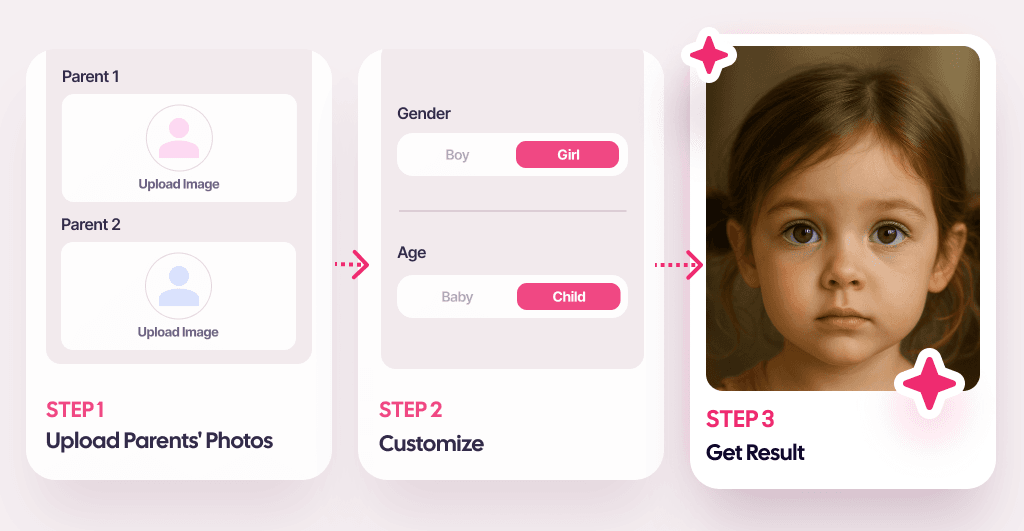
The age setting matters more than people expect. Infant faces carry less of a parent's distinguishing structure than a child's or a teenager's — cheeks are fuller, features less defined. If you're after resemblance you can point at, the child or teen setting usually shows it more plainly.
What it can't do
Worth saying plainly, because the category tends not to.
This is not a genetic prediction. The model blends the faces you give it; it doesn't know your DNA, your recessive traits, or which grandparent's nose is going to turn up. Two real siblings look different from each other, and neither is a blend of their parents' photographs.
Treat an AI baby photo as a plausible-looking face built from two other faces. It's fun, and sometimes uncanny. It isn't a forecast — closer to a genetics quiz than to an ultrasound.
What happens to your photos
Uploaded images and generated results are stored on our servers and deleted automatically after 30 days. They aren't shared with anyone.
If you want a result removed sooner than that, write to support and we'll delete it.
Quick fixes if your result looked wrong
| What you saw | Most likely cause |
|---|---|
| Baby resembles one parent only | That parent's photo was clearer or better lit |
| Features look generic | Face too small in frame, or turned away |
| Skin tone looks off | Strong colour cast from indoor lighting |
| Result looks smoothed and plasticky | A beauty filter was already applied to the source |
Re-upload with a straight-on, evenly lit, tightly cropped photo of each parent. That single change fixes most disappointing results.
Try it again
Upload a photo of each parent, pick boy, girl or twins and the age you want to see, and the result comes back in under a minute. The same two photos run twice will give you two different babies — that's normal, and worth doing once to see the range.
If you just want to see how far it can swing, running it with a celebrity photo is the low-stakes version of the same thing.
FAQ
Does a higher-resolution photo give a better result?
Only up to a point. Everything is resized to 1024 pixels on the long side, so beyond that the extra pixels are discarded. Cropping so the face fills more of the frame is what helps.
Can I use a photo where I'm wearing glasses?
Clear glasses are usually fine. Sunglasses are not — the eyes carry a lot of what makes the resemblance work.
Why do two runs on the same photos give different babies?
The model samples differently each time. Running it again is a reasonable way to see the range, not a sign something went wrong.
Can it use a childhood photo of a parent?
Yes, and it makes for an interesting comparison. Avoid mixing one childhood photo with one adult photo if you want a predictable blend.
How long do you keep my photos?
Thirty days, then they're deleted automatically.