
Am I Pregnant with Twins? Chances, Symptoms, and How to Visualize Your Future Babies

Illustrations are AI-generated
Conceiving twins may seem rare, but several factors increase your chances of having twins. The likelihood of twin pregnancies, especially in natural cases, is low, accounting for only about 2-3% of natural pregnancies, roughly 1 in every 80 to 90 births. However, several factors—genetic predisposition, age, lifestyle, and even fertility treatments—can influence the chances of having twins.
If you're curious about the potential for having twins, understanding the science behind twin pregnancies can be exciting. With advances in AI technology, services like the AI baby generator can predict what your future twins might look like based on photos of you and your partner.
Let’s dive in.
What decides whether you have twins?
Genetics decides one kind of twin and not the other. Fraternal twins come from two eggs released in the same cycle, and that tendency is inherited down the mother's line — a family history on her side genuinely raises the odds. Identical twins come from one egg that splits, which happens at roughly the same rate in every population and is not considered hereditary.
Identical Twins (Monozygotic): These twins occur when one fertilized egg splits into two embryos, sharing 100% of their genetic material. They are always of the same gender and are genetically identical. This type of twin pregnancy is random and not influenced by heredity.
Fraternal Twins (Dizygotic): These occur when two eggs are fertilized separately by two sperm cells, resulting in twins that share about 50% of their genetic material. These twins can be of different genders and look more like regular siblings. Genetics plays a significant role in fraternal twin pregnancies, especially with superovulation or hormonal stimulation.
How do you know if you’re pregnant with twins?
Before a scan, you cannot know — you can only suspect. Stronger nausea, faster weight gain, measuring larger than expected and unusually high fatigue all appear more often in twin pregnancies, but each one has ordinary explanations too. An ultrasound is the only thing that settles it, and it can show two sacs as early as the fourth week.
Several factors increase the likelihood of conceiving twins. Here's a look at what you can do to increase your odds:
- Family History: If twins run in your family, especially on your mother's side, your chances of having twins increase. The presence of a hyperovulation gene can cause multiple eggs to mature in a single cycle.
- Age and Hormonal Changes: Women over 30–35 years of age tend to release more than one egg per cycle, which can lead to fraternal twins. Age plays a major role in natural twin conception.
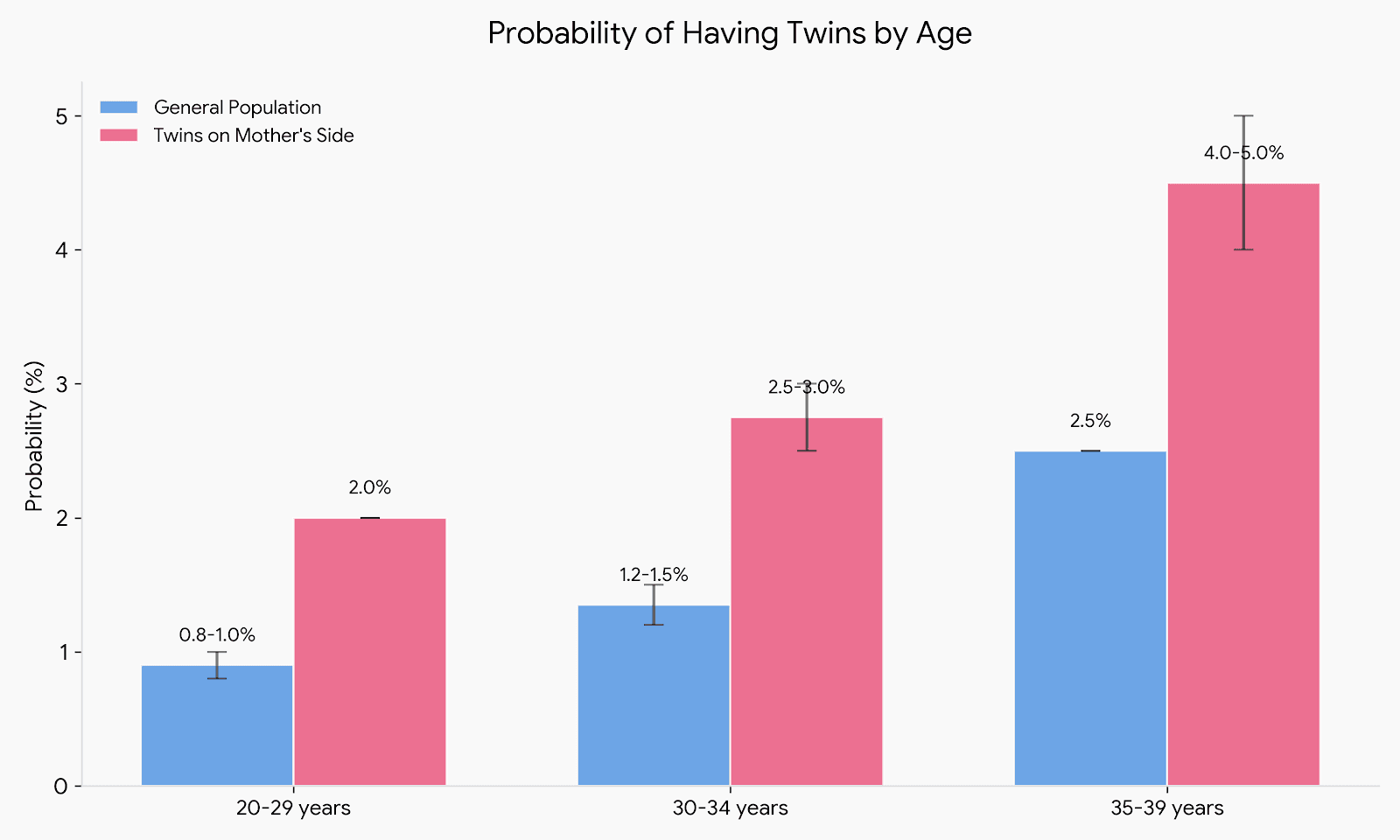
Chances of having twins naturally for different ages
The number of twins being born has increased, largely because women are having children later in life. The probabilities of having twins based on age are as follows:
For women aged 20-29, the chance of having twins is approximately 0.8% to 1%.
For women aged 30-34, the chance increases to about 1.2% to 1.5%.
For women aged 35-39, the likelihood rises to around 2.5%.
Additionally, if you have a family history of twins on your mother's side (not from your husband's or your father's side), your chances of having twins are higher. The revised probabilities are:
For women aged 20-29, the chance of having twins is about 2%.
For women aged 30-34, the chance increases to roughly 2.5% to 3%.
For women aged 35-39, the likelihood rises to approximately 4% to 5%.
Please note that these percentages are approximate and apply only to natural pregnancies, excluding those achieved through IVF. These figures do not pertain to identical twins, as their occurrence is determined by different factors.
- Fertility Treatments: Methods like IVF (In Vitro Fertilization) often result in multiple pregnancies as multiple embryos may be implanted. Similarly, hormonal treatments like Clomid or injections containing follicle-stimulating hormone can lead to the release of multiple eggs.
- Nutrition and Lifestyle: Some studies suggest that a diet rich in dairy products, whole grains, and yams may increase the chances of conceiving twins. However, there's no conclusive scientific evidence to back up these claims.
Did you know? The town of Igbo-Ora in Nigeria is known as the "Land of Twins" due to the unusually high number of twin births. Their diet, particularly the consumption of yams, is often linked to this phenomenon.
Can a twin pregnancy calculator predict twins?
No calculator can tell you whether you are carrying twins. What the honest ones do is restate known odds — your age, your family history, whether fertility treatment was involved — and none of that observes your actual pregnancy. Folk methods for conceiving twins deliberately are myths, and the section below goes through the common ones.
Whatever people may say about folk methods for increasing the chances of conceiving twins, these are simply myths and have no basis in reality.
While some may believe they have succeeded with these methods, it is likely due to underlying factors that they were not aware of—factors that scientifically increase the likelihood of having twins. Therefore, if you have a strong desire to have twins or, conversely, wish to avoid having them, it is essential to discuss your plans with your gynecologist before starting your pregnancy journey.
Early twin pregnancy symptoms
Wondering if you might be pregnant with twins? Here are a few early signs that could indicate a twin pregnancy. What signs of twins or multiples can we see in early pregnancy?
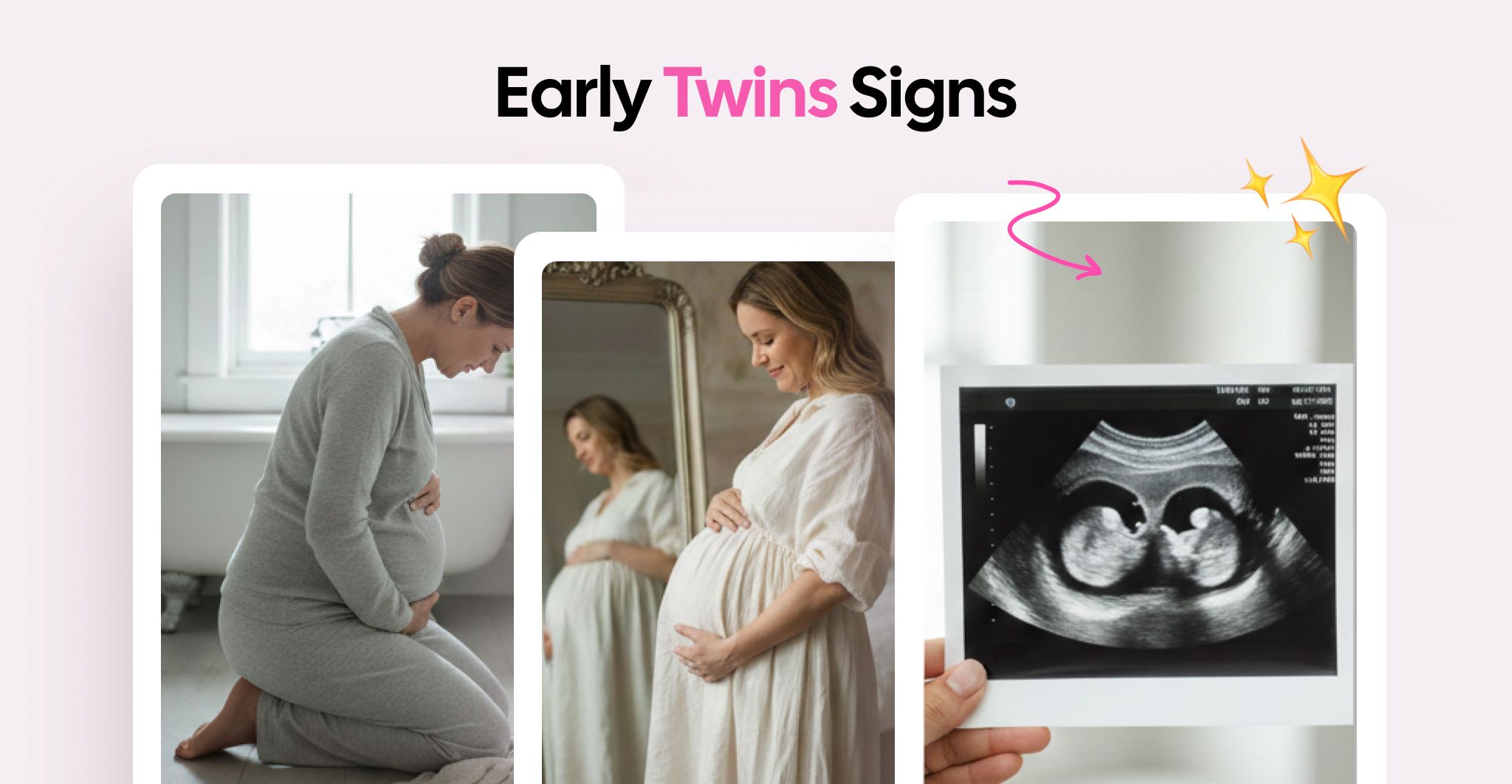
- One of the first signs is severe morning sickness — it could indicate that you are carrying twins. The presence of two embryos typically has a stronger effect on your body than one. If you notice symptoms such as severe nausea, aversion to certain smells, and other signs of toxemia, pay attention to those indicators. Did you experience any of these symptoms? Reflecting on them may help you estimate the likelihood of having twins before your first ultrasound.
- Additionally, rapid abdominal growth can also suggest that you might be carrying twins or multiples. When twins or multiples develop, they require more space in the uterus, which becomes especially noticeable, particularly if this is not your first pregnancy. You may notice a significant difference in abdominal growth during the early months.
- To definitively find out if you are expecting twins, an ultrasound scan is the only reliable way to confirm twins. But as ultrasounds cannot always detect everything, especially if the embryos are positioned in a way that makes viewing difficult. Some women learn they are pregnant with twins as early as the fourth week, so the timing can vary based on the position of the embryos and the skill of the ultrasound technician.
How AI Can Help You Predict What Your Twins Might Look Like
The AI twins generator can help you visualize your potential future children, even before they are conceived. By using the AI-powered twin visualization technology, which simulates how your genetic traits may be passed on to your children, you can upload a photo of yourself and your partner, and the tool will generate a realistic image of what your twins might look like.
To get a photo of your future twins, switch on the Twins mode in the tool.
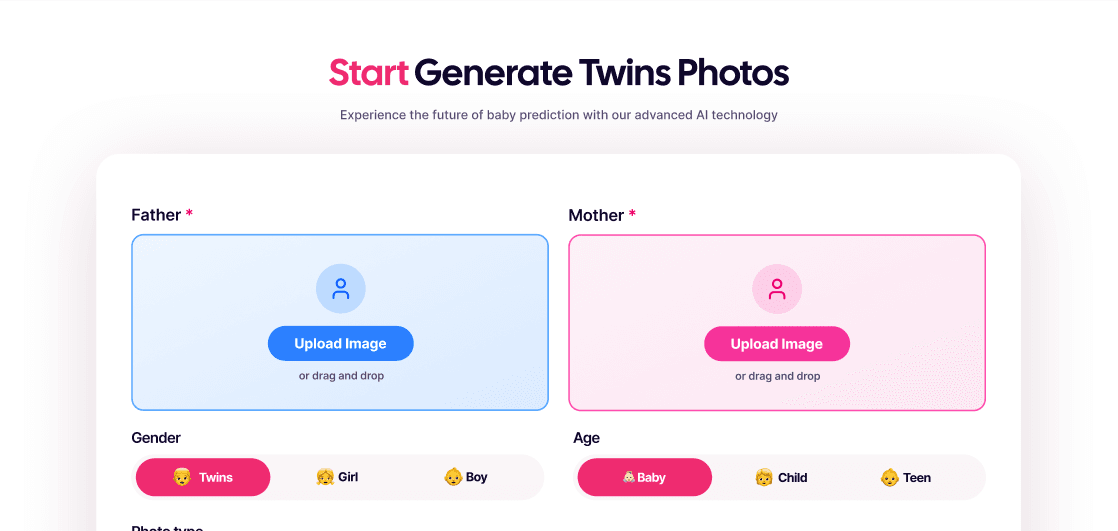
Did you know? You can generate photos of your potential twins or multiples using your parents' and your husband's parents' features. With our $2.99 three-day test access, you can generate up to 1,000 variations and experiment with different family photo combinations. Try different combinations of photos from both sides of the family!
Learn how AI Baby Generator Works.
This tool uses advanced facial recognition algorithms to predict the features of identical or fraternal twins based on the genetic traits of both parents.
How to Get Twins Naturally: Factors to Consider
While genetics play the most significant role, lifestyle factors can also influence your chances of having twins. It's important to maintain a healthy diet, manage stress, and consider your overall health and fertility.
Some natural methods, such as certain foods, supplements, and even planning conception during specific seasons, might influence your chances. However, it’s always recommended to consult with your doctor to ensure you’re making the best choices for your fertility health.
How Your Twins Could Look: AI Twins Generator
Wondering what your future children might look like? You can easily generate a digital portrait of your future twins using an AI-powered tool. You can even use the generated portrait for a creative pregnancy announcement if you’re really pregnant with multiple babies.
While predicting twins can be exciting, the joy of parenthood comes when you meet your little ones in person. Whether you're curious about how to get twins or simply want to visualize the future, AI tools can offer a fun and educational way to look ahead.
Note: This article is for entertainment and informational purposes only and does not replace professional medical advice.
FAQ
Four questions that come up more than any others once someone starts wondering whether it is twins: how likely it is, whether it runs in the family, what makes identical and fraternal twins different, and when anyone can say for sure.
What are the chances of having twins?
Around 2 to 3% of natural pregnancies are twins, and age moves the number: roughly 1% for women aged 20 to 29, about 1.2 to 1.5% at 30 to 34, and near 2.5% at 35 to 39. IVF sits outside these figures, because transferring more than one embryo changes the odds entirely.
Do twins run in families?
Fraternal twins do, and the line that matters is the mother's — the tendency to release more than one egg per cycle is what gets inherited. Identical twins, where one fertilised egg splits, occur at much the same rate everywhere and are not considered hereditary.
What is the difference between identical and fraternal twins?
Identical twins come from one egg that split, so they share 100% of their genetic material and always look strikingly alike. Fraternal twins come from two eggs fertilised separately and share about 50%, the same as any pair of siblings born years apart.
When can you know for certain that it is twins?
Only an ultrasound confirms it. Some women find out as early as the fourth week, others later, depending on how the embryos sit. Early symptoms — stronger nausea, faster weight gain, measuring ahead — raise suspicion but confirm nothing on their own.