
Do Newborns Lose Their Hair? A Calm Guide for Parents
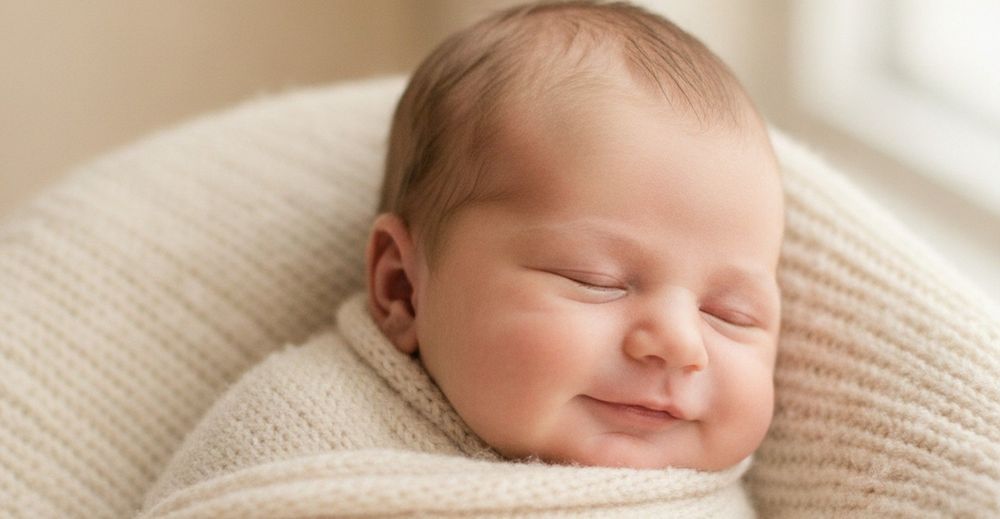
Do newborns lose their hair? Yes, and it is completely normal for them to lose some or all of their first hair in the early months. Doctors call it neonatal hair loss, a type of telogen effluvium. It looks alarming on the crib sheet, but it is harmless. New hair grows in to replace what falls out.
So if you spot thin patches or find soft strands on the pillow, take a breath. This is one of those baby changes that surprises almost every parent. Your baby is fine, and their scalp is doing exactly what it should.
Why do newborns lose their hair?
Your baby grew that first hair in the womb. After birth, pregnancy hormone levels drop fast. That drop pushes many hair follicles into a resting phase at the same time. Resting hairs let go, so the birth hair sheds over a few weeks.
Adults shed hair too, but in small waves you never notice. A newborn's follicles synced up before birth, so they shed together. That is why the loss can look dramatic. Underneath, new follicles are already at work growing the next round of hair.
When does it happen and when does it grow back?
Most parents notice the shedding in the first few months, often around two to three months old. Some babies lose hair slowly, others seem to go patchy overnight. Both are normal.
Regrowth usually spreads across the first year. There is no exact timetable, and siblings can differ. If you are also wondering about shade, our guide on what color hair your baby will have walks through how genes shape it.
The new hair can surprise you. Color and texture often shift from the birth hair. A dark-haired newborn may grow light curls, and a bald baby may fill in thick and straight.
The bald spot at the back of the head
Many babies develop a smooth bald patch at the back or side of the head. This is friction hair loss, not a health problem. Babies sleep on their backs for safety, and that steady contact rubs the same spot.
The patch fills back in as your baby sits up and moves more. Supervised tummy time while awake takes pressure off the scalp and builds neck strength too. Keep placing your baby on their back to sleep, every time.
What is normal, and when should you ask a doctor?
Normal shedding is gradual and fairly even, and your baby is otherwise well, feeding and settling as usual. That picture needs no treatment at all.
It is worth a quick word with your pediatrician if you see bald patches with redness or scaling, patchy loss with broken hairs, or hair loss that seems to bother your baby. Those are signs a clinician should take a look, not causes for panic. This article is general information, not a diagnosis.
Gentle care for your baby's scalp
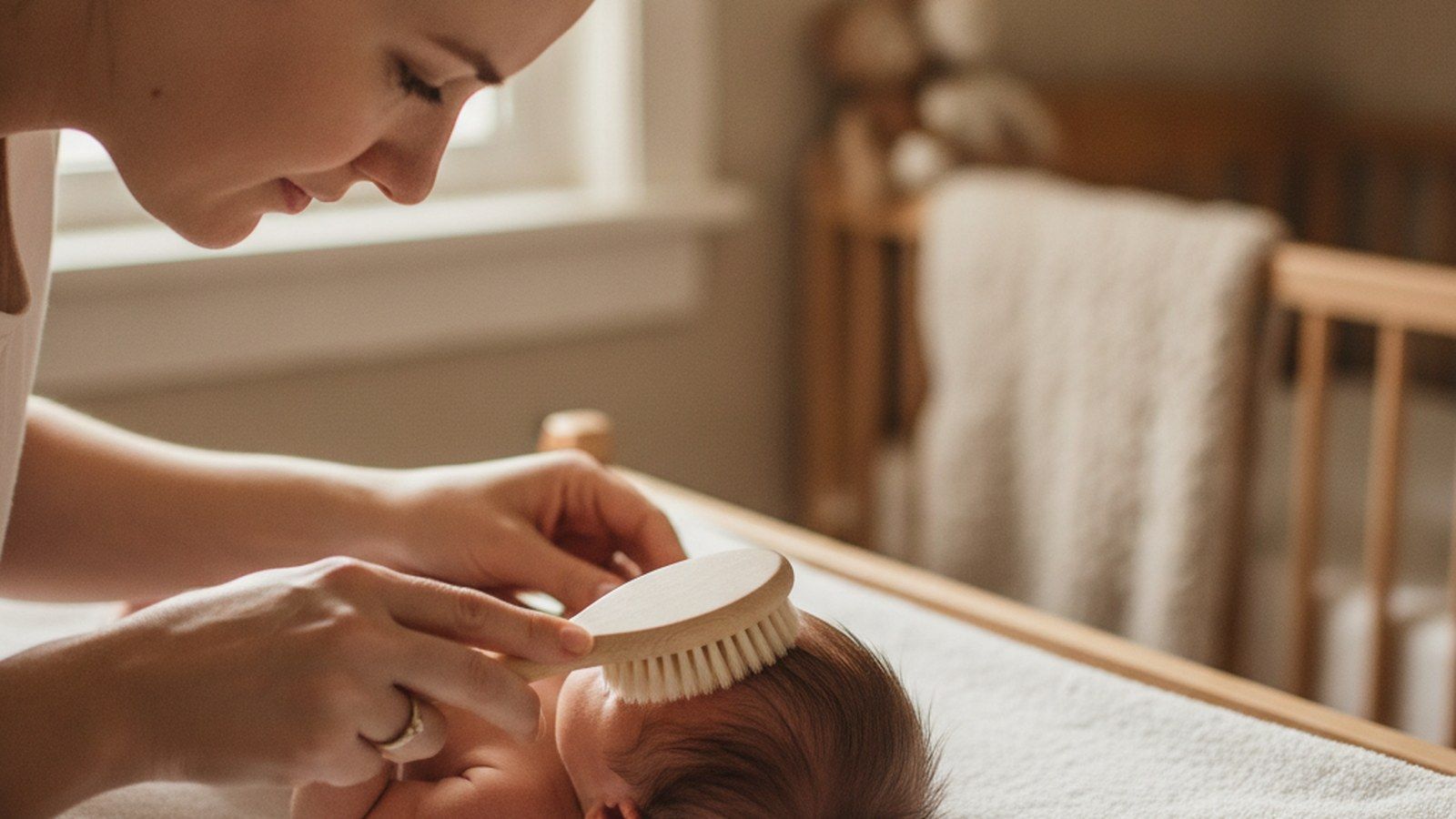
You did not cause the shedding, and no product can stop it. So keep things simple. Wash the scalp gently with plain water or a mild baby wash a few times a week. Over-washing is not needed and can dry the skin.
Use a soft brush to lift any cradle cap flakes and to soothe. Skip special hair treatments, oils marketed as regrowth aids, and tight bands. Your baby's follicles need nothing but time.
From birth hair to final hair
The hair your baby is born with is a first draft. Over the first year or two, color can lighten or deepen and straight can turn wavy. For the longer arc, see when babies' eyes and hair reach their final color.
FAQ
Is it normal for newborns to lose their hair?
Yes, common and harmless. Falling hormone levels after birth push many follicles into a resting phase, so the first hair sheds. New hair grows back in its place, usually across the first year.
When will my baby's hair grow back?
Regrowth typically spreads over the first year, with no fixed schedule. Some babies fill in by six months, others take longer. As long as your baby is well and the scalp looks healthy, slow regrowth is nothing to worry about.
Why does my baby have a bald spot on the back of their head?
It comes from friction. Lying on the back for safe sleep rubs one spot and thins the hair there. It is temporary and fills in with more awake, supervised tummy time and movement.
Will my baby's new hair be a different color?
Often, yes. The new hair can differ in color and texture from the birth hair. A dark-haired newborn might grow lighter hair, and fine hair can come back thicker as your baby grows.
A calm takeaway
Newborn hair loss is a normal chapter, not a warning sign. Wash gently, add tummy time, and let the new hair arrive on its own clock.
Curious what your little one might look like? Try our baby generator to preview your future baby and their hair in a minute.