
The Baby Shower Game Where Guests Vote on AI Baby Photos
Illustrations are AI-generated
Most baby shower games finish when the party does. This one doesn't: guests guess what the baby will look like, their guesses go in an envelope, and nobody finds out who won until the first birthday. It costs almost nothing to run and gives the party a second life a year later.
Here is the shape of it: generate a few dozen baby portraits from photos of both parents, print them, and let guests vote on which face the child will grow into. The three favourites go into a sealed envelope. A year later you open it next to the real baby.
Below is everything needed to run it — how many portraits to make, how to print and number them, how the voting works, and the five things that go wrong most often.
What you'll need
- 30 to 50 printed baby portraits
- Matte photo paper, or plain A4 at six portraits per sheet
- Scissors, or a paper trimmer if you own one
- A pen for every guest
- Voting slips (the text is below — copy it)
- One envelope and a marker
- A small prize you can post a year later
That's the whole list. The cost is printing plus a three-day trial.
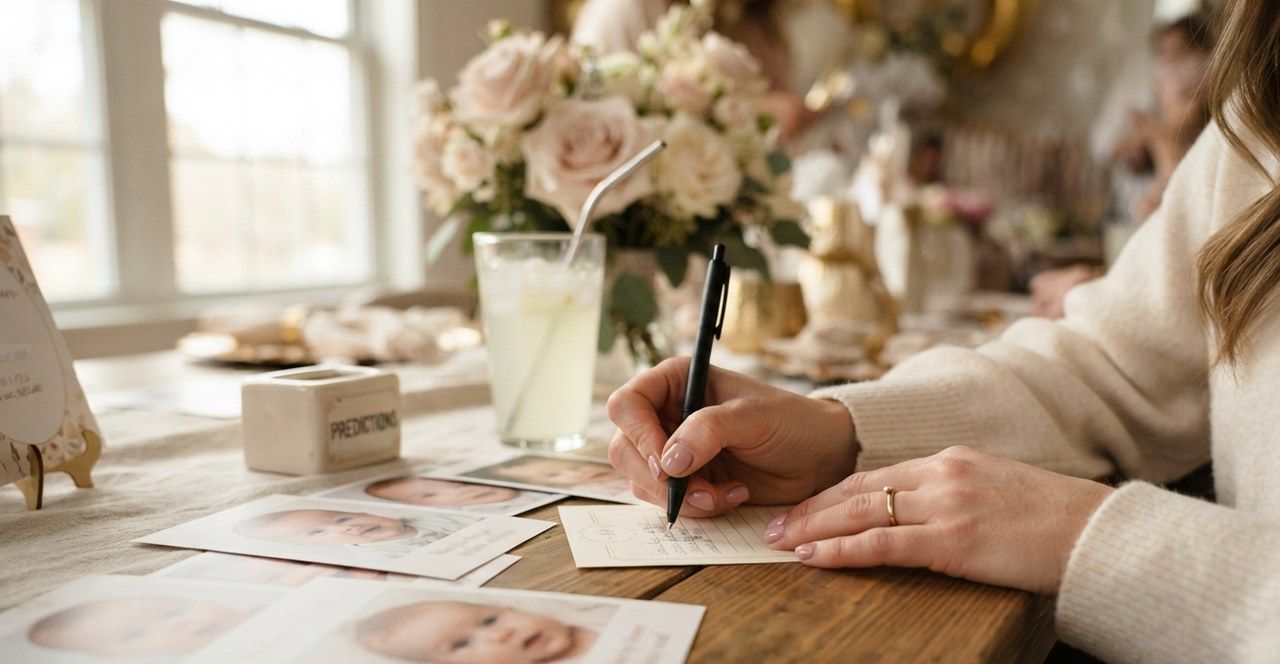
Before the shower: generating the portraits
Each portrait comes from one pair of parent photos. Change the photos and the face changes with them. Run the same two photos twice and you already get two different babies — feed it different source photos and the spread gets much wider.
One setting stays fixed across the whole set: age. Pick newborn or one-year and stay there. A deck that mixes ages makes the comparison at the first birthday meaningless, and this is the mistake that spoils the game more than any other.
How many portraits for how many guests
| Guests | Portraits | Sheets to print |
| 8–12 | 30 | 5 |
| 12–20 | 40 | 7 |
| 20 and up | 50 | 9 |
Under 30 and the votes pile onto two or three faces. Over 50 and people stop looking properly — they skim the pile and pick whatever is on top.
Which photo combinations give the widest spread
Work through these pairs, one generation each:
- A recent photo of each parent
- Both parents smiling, then both neutral
- Teenage photos of each
- Childhood photos of each
- Baby photos of the parents themselves
- One parent paired with a grandparent's photo
That last one earns its place. Children skip a generation in the face more often than people expect, and grandparent pairings tend to produce the portraits guests argue about hardest.
Before you upload anything, it's worth reading which five things change the result. Lighting and framing move the outcome further than any setting in the generator does.
Printing and numbering
Six portraits per A4 sheet gives you something close to a playing card — big enough to read a face, small enough to pass around a table. Matte paper beats glossy under warm indoor lighting, which is what most showers have.
Cut them out and number the back of every portrait, 1 to 50, before anyone arrives.
This step sounds fussy and it isn't. Counting votes on unnumbered faces means holding up each portrait and asking who picked this one, which takes twenty minutes and kills the momentum. With numbers on the back the whole count takes two.
How to play
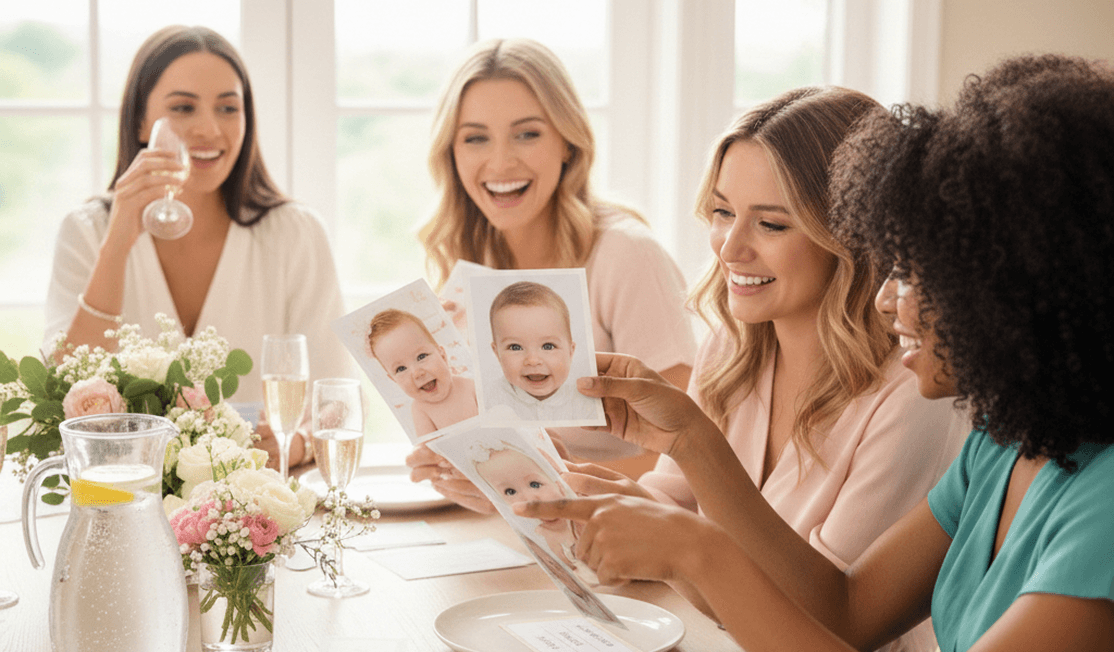
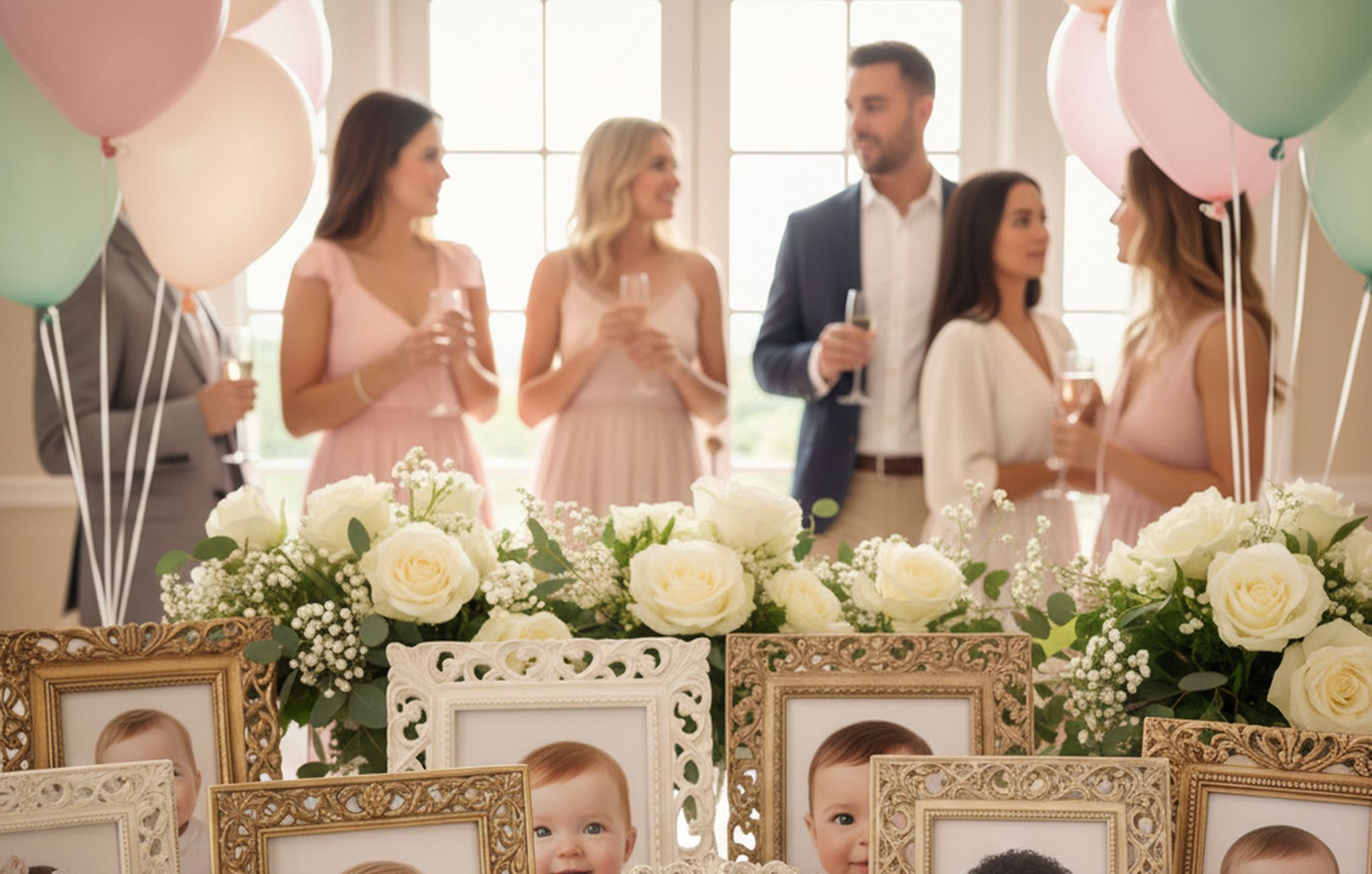
Spread the portraits face up on a table. No stacks — everyone should see the full set at once.
Give each guest a pen and a slip:
Guest name: ______________________

My top three, in order:   # ____    # ____    # ____

One word for why: ______________________
Ten minutes is enough. Any longer and the room goes quiet in the wrong way.
Collect the slips. The three numbers with the most first-place votes win the round. The "one word for why" line looks like a throwaway, but it's the part people read aloud, and it's what turns a quiet baby shower game into a loud one — someone always writes "chin", and someone else says "that's my chin".
Sealing the top three
Put the three winning portraits in the envelope. Write the date you'll open it on the front — the baby's first birthday, roughly.
Then hand the envelope to somebody who isn't the parents and isn't the host.
Both of those people are about to move house, reorganise a nursery, or live through a newborn's first three months. The envelope disappears. Give it to an aunt, a neighbour, whoever keeps their paperwork in order, and text them a photo of it so it can be found again.
The reveal at the first birthday
This is the part that separates the baby shower game from every other one played that afternoon. Open the envelope in front of the guests, hold each of the three portraits next to the child, and let the room argue.
Winner is whoever put the closest one first. Keep the slips from the shower and you'll have the names — this is the second reason to make people write their names down.
Post the prize if the winner isn't there. That single gesture is what people remember about the whole thing a year on.
Worth saying plainly, because these games invite it: none of this is a prediction. The portraits blend two faces you supplied. They don't know the child's genetics, and two real siblings prove the point by looking nothing like each other. Treat a close match as a good evening, not evidence.
What tends to go wrong
Five ways this baby shower game goes sideways, all of them avoidable in the hour before guests arrive.
Mixed ages in one deck. Newborn portraits next to one-year portraits, and the comparison falls apart before it starts.
Too few portraits. Twenty faces for eighteen guests and half the room votes for the same three.
Unsigned slips. A year later nobody remembers who picked number 12.
The envelope opened early. Someone peeks at Christmas and the reveal is gone.
Plain copier paper. Faces come out grey and flat, and guests vote on print quality instead of features.
FAQ
What is the baby shower guess the baby game?
A baby shower game where guests choose which face the baby will have. The traditional version uses baby photos of the parents; this version uses generated portraits, so guests compare faces the child might grow into rather than faces from thirty years ago.
How do you play the guess-the-baby game with photos?
Lay out the numbered portraits, give everyone a slip, and have each guest write their top three numbers in order. Collect the slips, count first-place votes, seal the top three, open them at the first birthday.
How many portraits do you need for a baby shower game?
Around 30 for a small gathering and 50 for twenty guests or more. The number matters less than the variety — thirty portraits from thirty different photo pairings beat fifty from the same two photos.
What is the AI baby prediction app?
Any tool that blends two parent photos into a baby face. We make one, and this game runs on it, but the mechanics work with whatever you already use. What changes the result is the source photos, not the brand.
When do you open the envelope?
The first birthday is the usual choice — the face has settled enough to compare. Some families open it at the christening or the six-month mark instead. Write the date on the envelope either way, or it drifts.
Try it yourself
Upload a photo of each parent, pick the age you want to see, and run it once to see the range before you commit to a full deck.
If you want a lower-stakes version first, a genetics quiz works as a warm-up round at the same party.