
The Expectant Dad's Guide to Bonding with Your Baby Before Birth (+AI tools for Prenatal Connection)

Illustrations are AI-generated
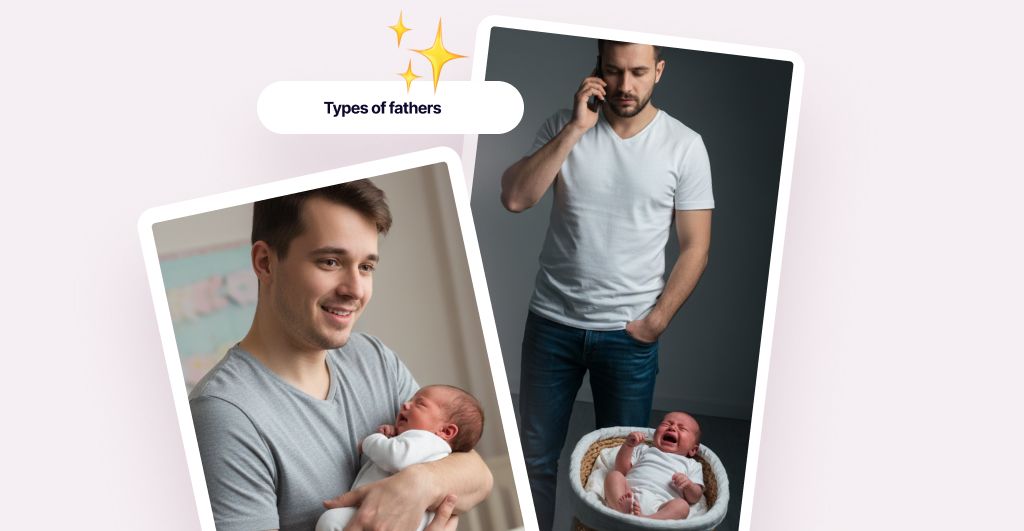
There is a father on paper. And there is a dad in practice. The difference is enormous. A biological father is a fact. A real dad is a choice — made daily. He talks, plays, listens, and holds. He does not simply arrive home and provide.
For many men, that choice begins not at birth — but in the months before it. The question is: how does an expectant father actually build that connection before the baby arrives?
Making the Baby Feel Real — The Power of Seeing a Face
Pregnancy is physical for one parent and abstract for the other, and that gap is the whole problem. A father feels no kicks and carries no symptoms, so the baby stays an idea until something makes it concrete. A face — from a scan, or generated from your two photos — is usually the first thing that does.
What Ultrasound Images Actually Do
There is a reason ultrasound images change something in expectant parents. It is not the medical information. It is the face. The moment an abstract idea becomes a face, the emotional brain activates differently. Visualization is one of the oldest and most effective bonding tools available — and it now works at a level that was not possible before.
Generate a Portrait Before the Birth
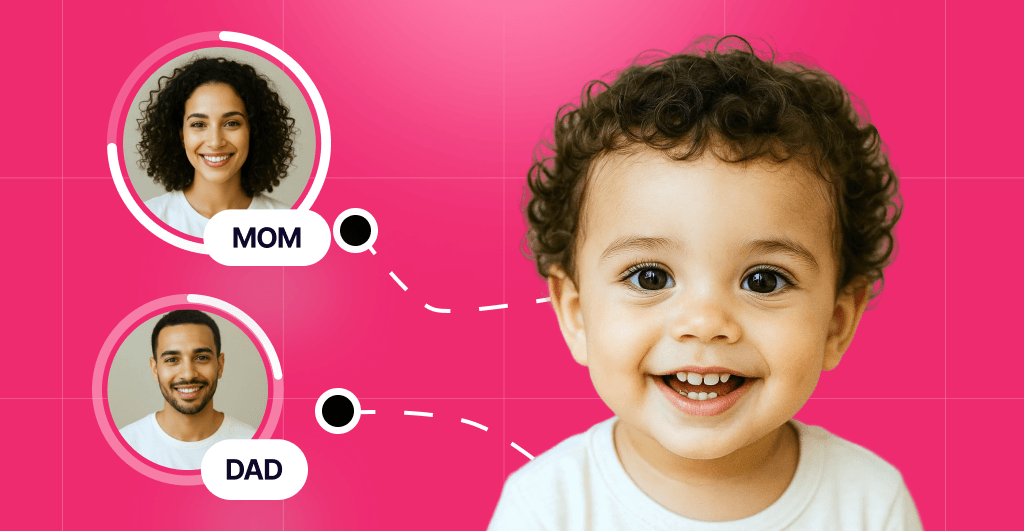
One approach many expectant fathers find genuinely effective is creating a predicted portrait of the baby before birth. The AI Baby Generator lets both parents upload their photos and generates a realistic image of what the baby might look like. For many dads, seeing that image triggers something that weeks of reading parenting books did not.
To understand which features each parent is most statistically likely to pass on, this post on how genes determine your future baby's appearance puts the science in plain language.
For the most realistic results, read why framing matters more than resolution. Most disappointing results trace back to the source photo.
Why Dads Bond Differently During Pregnancy — And That's Okay
Fathers usually bond through doing rather than feeling, and later than mothers. That is not detachment; it is a different route to the same place. Expecting the rush of connection to arrive on its own during pregnancy leaves many men quietly convinced something is wrong with them, when nothing is.
The Honest Reality
Here is something most expectant fathers will privately admit. Before becoming a parent, it is easy to watch a struggling child in a restaurant and think: that will never be me. Then the baby arrives. And suddenly nothing works the way it was supposed to.
As one father put it: "I genuinely tried everything. I want to apologize to every fellow passenger on that flight."

Fatherhood cannot be fully prepared for. The body does not prepare itself the way a mother's does. There are no hormonal shifts, no physical signals, no felt movement from inside. For most men, the reality of fatherhood arrives at birth — sometimes even after.
Three Things Expectant Dads Can Actually Do Right Now
Three actions do most of the work: put a face where you will see it daily, talk to the baby out loud, and take over the practical preparation. None of them requires feeling connected first — they are what produce the feeling, which is the part nobody explains.
| What to do | What it takes | Why it helps |
|---|---|---|
| Use the portrait naturally | Two photos, a lock screen or a printed copy | Turns an abstract pregnancy into a face you see daily |
| Talk to the baby | A few minutes, out loud, no script | Hearing develops before birth, and the habit outlasts it |
| Handle the practical side | Appointments, the car seat, the bag | Bonding through doing, which is how many fathers get there |
1. Use the Portrait in Ways That Feel Natural
Once a predicted portrait exists, there are practical ways to use it — without overthinking it.
See how other parents are using the baby face prediction tool creatively — including ideas for announcements, reveals, and shareable content.
2. Talk to the Baby — It Works
The fetus begins responding to external voices from around 24 weeks. Reading aloud for ten minutes a day is not a sentimental exercise. It is a real head start. A playlist of music played near the belly, a voice recording that a partner can play — these are not small gestures. They are the beginning of a relationship.
3. Prepare the Practical Side — It Counts as Bonding Too
Preparing the nursery, setting up the car seat, learning how to use the carrier — these are not chores. They are acts of commitment to a person not yet met.
One expectant father described his final months this way: "We had planned for this child. Instead of living out of a suitcase, we started building a home. A car replaced taxis. The TV and gaming console were replaced by strollers and tiny jackets. We see doctors more often than friends now. We learned we are having a son. I don't know what could be more exciting for a man."
His question — how to spend the remaining month — has one good answer. Make it real in every way possible. The portrait on the wall. The name said out loud. The letter written and sealed.
Turn the AI Baby Portrait into a Shared Moment
This is one of the simplest and most effective bonding activities for couples during pregnancy. Both partners look at the generated portrait together. Each guesses: whose nose is that? Whose eyes? Whose chin?
If the portrait hasn't been created yet, a baby face prediction tool takes five minutes and becomes an evening. Upload the photos, compare the result to childhood pictures of both parents, debate the resemblance.
The Fatherhood Prep Checklist — Before Day One
The checklist below covers what a father can own before the birth, from appointments to the car seat. Doing these is not admin instead of bonding; for most men it is the bonding, because attachment tends to follow involvement rather than precede it.
Use this in the final weeks before the birth:
- [ ] Generate and save the baby's predicted portrait
- [ ] Set up at least one corner of the nursery yourself
- [ ] Have one real conversation with the partner about parenting values
- [ ] Set a shared calendar for remaining prenatal appointments
- [ ] Practice the car seat, carrier, or stroller once before it matters
- [ ] Read one book or listen to one podcast made for new fathers
FAQ — Expectant Dads and Bonding
The three questions expectant fathers ask most often, and the honest answers: whether it is normal to feel nothing yet, when the feeling usually arrives, and what actually helps in the meantime.
Is it normal for dads not to feel connected to the baby during pregnancy?
Completely normal. Most fathers report that the real bond forms at birth or shortly after. The physical experience of pregnancy simply isn't theirs — but deliberate emotional investment before birth makes a measurable difference.
When do most fathers start feeling genuinely bonded to their baby?
For many, it is the moment they hold the child. For others, it begins earlier — often when they first see a scan image, or hear the heartbeat, or see a predicted portrait. The trigger is almost always visual.
What can a dad do to feel more involved during pregnancy?
Talk to the bump. Attend every appointment possible. Set up something physical in the home — the nursery, the car seat. And generate a portrait prediction — having a face to look at changes the emotional experience entirely.
Being a father is a fact. Being a dad is a practice. It starts now — not at birth.