Does My Baby Look More Like Mom or Dad?
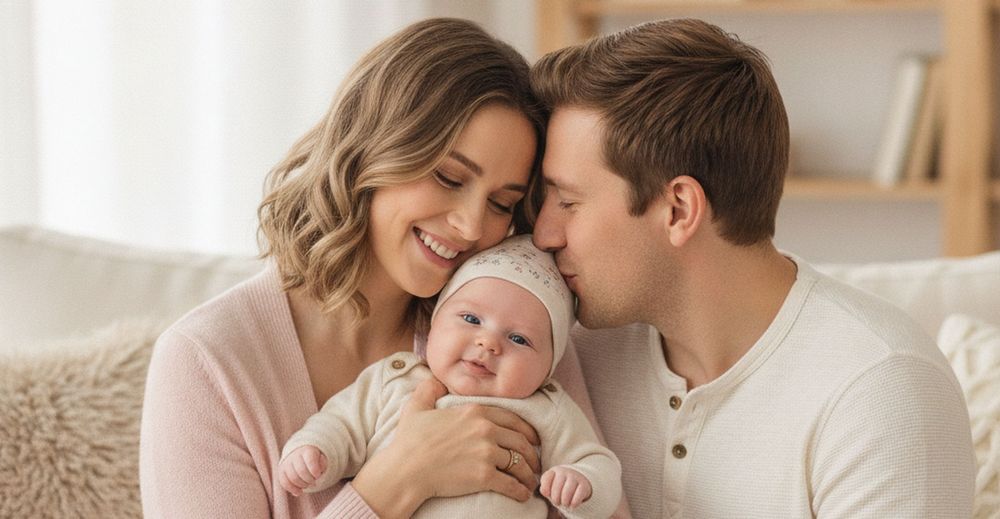
Genetically, it's a tie. Your baby gets half their DNA from each parent, so neither side is wired to win. The idea that babies "look like dad first" is a myth — one that large studies have failed to confirm.
Yet families argue about it constantly, and often everyone's a little right. Resemblance is not one thing; it's dozens of separate traits, each inherited on its own. Your baby can have mom's eyes, dad's chin, and grandma's smile all at once.
The short answer: it's roughly 50/50
Each parent passes down one copy of every gene, so the raw genetic contribution is even. What you *see* is a different question — a few strong traits can make a baby "read" as one parent even when the overall mix is balanced.
The old claim that newborns resemble their fathers, supposedly so dad sticks around, made headlines decades ago. Follow-up research with larger groups didn't hold it up. Ask strangers to match baby photos to parents, and they guess mom and dad about equally well.
Why resemblance isn't one single thing
Think of a face as a set of independent dials, not a single blend:
- Eye color and shape — inherited separately from everything else.
- Nose and chin — strongly heritable, often traceable to one side.
- Hair color and texture — two different gene sets, mixed independently.
- Skin tone — polygenic, usually landing between the parents.
- Smile, expressions, mannerisms — partly learned, which is why babies seem to "act like" a parent.
Because each dial moves on its own, your baby turns out a mosaic. That's why one sibling can favor mom and the next favor dad, from the exact same parents.
Which traits tend to "come from" one parent?
A dominant gene version drives some features, so they show up whenever a child inherits one copy. These often look like they came straight from one side:
| Trait | Tends to show when inherited from one parent |
|---|---|
| Brown eyes | Dominant over green and blue |
| Dark hair | Dominant over light |
| Dimples | Often dominant |
| Cleft chin | Runs in families, but polygenic — not one dominant gene |
| Curly hair | Partly dominant over straight |
The chin row is the one that breaks the pattern. Family studies going back to 1960 record smooth-chinned parents having cleft-chinned children, which a single dominant gene cannot produce. Our post on whether a cleft chin is genetic lays out that evidence.
Even here, "dominant" is a tendency, not a guarantee — most of these traits involve more than one gene, so exceptions are normal.
Why everyone sees a different parent
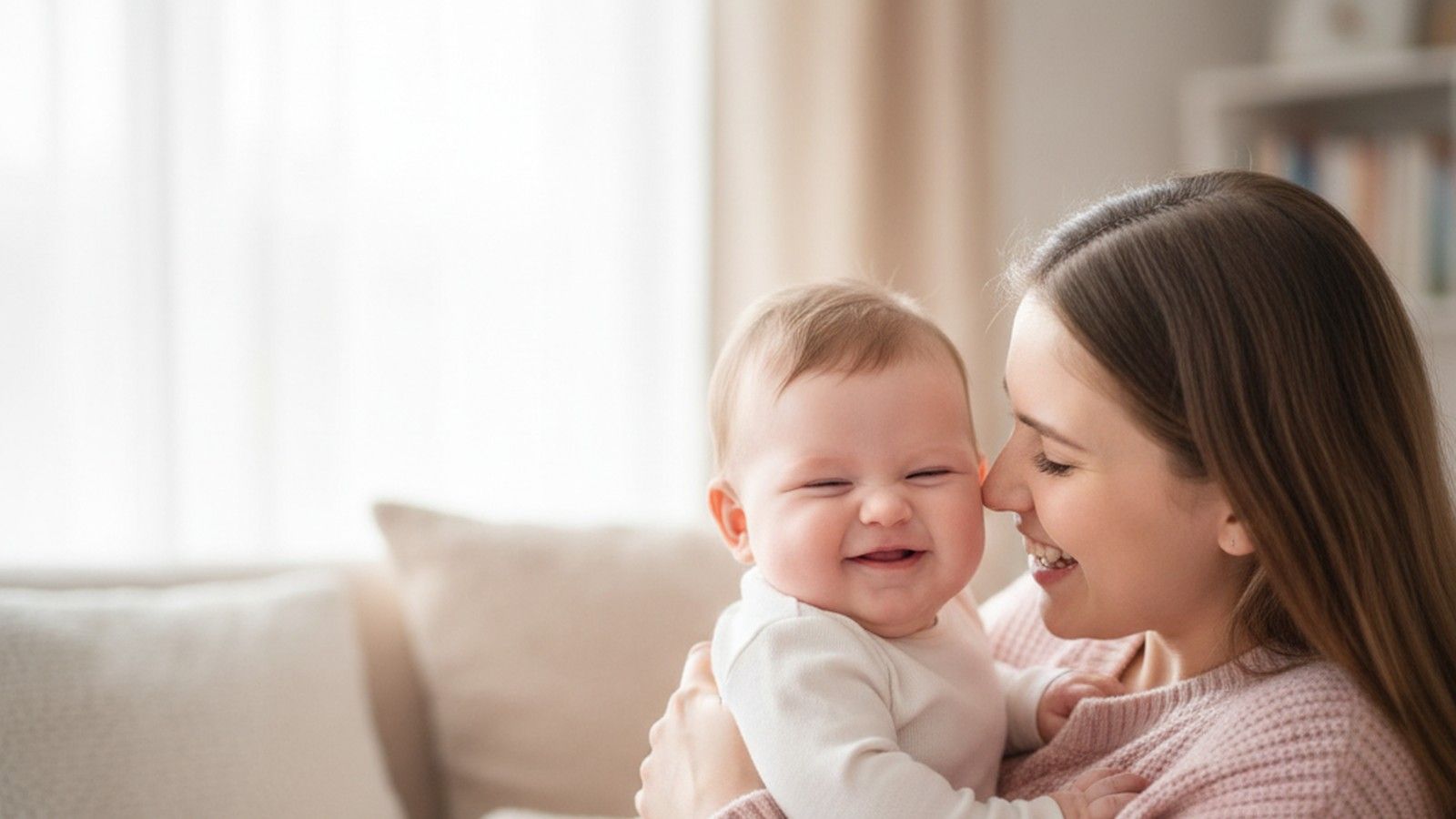
Ever notice that mom's family sees dad and dad's family sees mom? That's not only bias — though bias is real. People latch onto the one or two features that stand out and call the whole match on that. A strong nose or a distinctive brow can anchor the impression, even if most other features lean the other way.
Newborn faces are also puffy and unformed, which gives everyone room to project. As the face develops, opinions shift.
Will it change as my baby grows?
Almost certainly. Baby faces change fast in the first two years and keep refining through childhood. A newborn who looks just like dad can grow into a teenager who's the image of mom. Bone structure, the exact one that carries family resemblance, keeps developing well past infancy.
So if the "who do they look like" debate isn't settled at birth, give it time. It genuinely isn't decided yet.
Curious how the mix might land?
You don't have to wait to get a preview. Our AI baby generator blends both parents' photos into a lifelike baby face in seconds, so you can see one version of how the features might combine.
It's a fun glimpse rather than a prediction — real genetics keeps its surprises. Eyes are one of the most-asked-about traits, so you can also check the odds for what color eyes your baby will have.
FAQ
Does my baby look more like mom or dad?
Genetically it's about 50/50 — each parent contributes half the DNA. Whether a baby *appears* to favor one parent depends on which specific traits are most noticeable, not on any built-in advantage for either side.
Do babies really look like their fathers first?
That's a popular myth. Early research suggested it, but larger studies couldn't confirm it. On average, newborns resemble both parents about equally.
Why do my baby's features seem to come from one side?
A few dominant traits — like brown eyes or a cleft chin — can make a baby strongly resemble one parent, even when the overall genetic mix is balanced. Observers focus on the standout features.
Can two siblings look completely different?
Yes. Each child inherits a different random combination of the same parents' genes, so siblings can favor different parents or look like neither strongly.
Will my baby's resemblance change over time?
Very likely. Faces change dramatically in the first years and keep developing through childhood, so who a child "looks like" often shifts with age.