
Boy or Girl? Gender Prediction Myths vs. Science
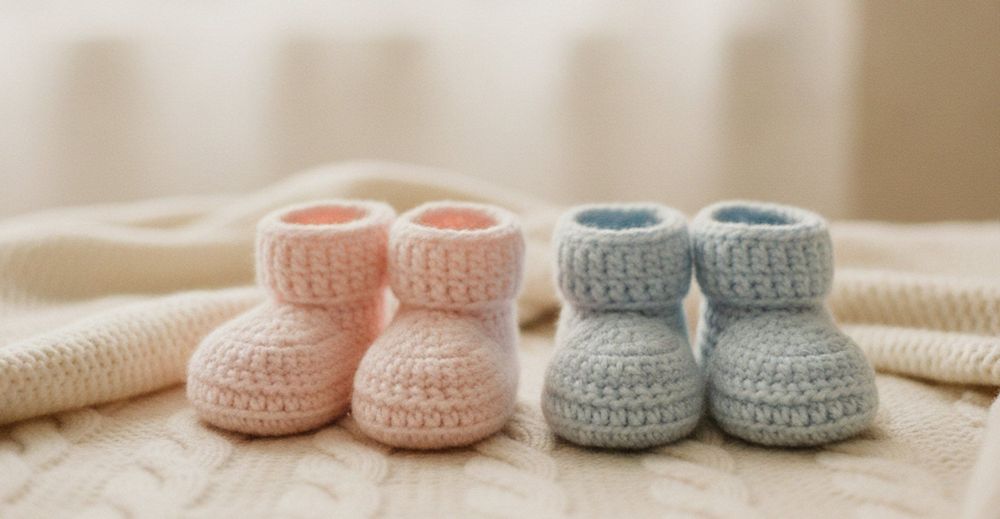
The honest answer: your baby's sex was decided at the moment of conception, and no belly shape, cravings chart, or ring-on-a-string can read it. Those games are fun — just not evidence.
What *can* tell you is a blood test or an ultrasound, at the right time. Below is what actually sets a baby's sex, when you can reliably find out, and how the popular myths hold up when you check them.
The short answer: it's a 50/50 coin flip at conception
Every baby inherits an X chromosome from the mother. The father's sperm carries either an X or a Y, and that single contribution decides the outcome:
- X from dad → XX → girl
- Y from dad → XY → boy
Because roughly half of sperm carry each, the odds are close to 50/50 for any pregnancy. The result is locked in immediately — everything after is just finding out, not influencing.
What determines your baby's sex
The Y chromosome carries a gene (SRY) that switches on male development a few weeks in. Without it, development follows the female pathway. That's the entire mechanism, and it runs on the father's contribution — which is why, biologically, the father's side "determines" sex.
Nothing the parents do around conception reliably tips this. Diet, timing, and position have all been claimed to work; none survive careful study.
When can you actually find out?
Here's the real timeline, from earliest to most certain:
| Method | When | Reliability |
|---|---|---|
| NIPT blood test | From ~10 weeks | Very high |
| Ultrasound (anatomy scan) | ~18–20 weeks | High |
| At birth | Delivery | Certain |
NIPT (non-invasive prenatal testing) checks fragments of the baby's DNA in the mother's blood and is both early and accurate. The anatomy-scan reveal depends on the baby's position, so it can occasionally keep you guessing.

Popular gender-prediction myths, tested
The old wives' tales are a fun tradition. Held up to evidence, they're coin flips:
- Carrying high vs. low — belly shape reflects muscle tone, baby position, and body type, not sex.
- Heart rate over 140 = girl — studies find no reliable difference before labor.
- Sweet vs. salty cravings — driven by appetite and habit, not the baby.
- Bad morning sickness = girl — there's a weak statistical hint in some data, but nowhere near predictive.
- The ring or pendulum test — pure chance, guided by tiny hand movements.
- The Chinese gender chart — the lunar-age grid your aunt swears by; the studies that checked it against real births landed on chance. The chart and calculator print that evidence next to your answer.
Enjoy them at the baby shower. Just don't paint the nursery based on a swinging ring.
Want to play them properly? The baby gender predictor quiz scores all twelve as a running tally, and prints what the evidence says under every result.
Can you influence whether it's a boy or girl?
For a natural pregnancy, no reliable method exists. The timing and diet "methods" sold online don't beat chance in good studies. The only medical way to select sex is through IVF with genetic testing, which is regulated and used for specific reasons, not casual preference.
While you wait, picture the whole face
Sex is one small part of the excitement — most parents are just as curious about who the baby will look like. Our AI baby generator blends both parents' photos into a lifelike preview, and you can pick a boy or girl result to imagine either way. It's for fun, not a forecast. Curious about specific traits? See the odds for what color eyes your baby will have.
FAQ
Can you predict if it's a boy or girl before an ultrasound?
Only with a blood test. NIPT can indicate sex from about 10 weeks by analyzing the baby's DNA in the mother's blood. Home methods and old wives' tales aren't reliable.
What determines a baby's sex?
The father's sperm. It carries either an X chromosome (girl) or a Y chromosome (boy), while the mother always contributes an X. That single contribution sets the outcome at conception.
Is the baby's heart rate a reliable gender predictor?
No. The belief that a heart rate above 140 means a girl isn't supported by evidence. Fetal heart rates vary for many reasons unrelated to sex.
When is the anatomy scan for gender?
Usually around 18 to 20 weeks. Accuracy is high but depends on the baby's position, which can sometimes hide the view.
Can you choose your baby's sex?
Not naturally in any reliable way. The only medical method is IVF with genetic testing, which is regulated and used for specific medical reasons.