
AI Baby Generator from Parents' Photos: See Realistic Predictions
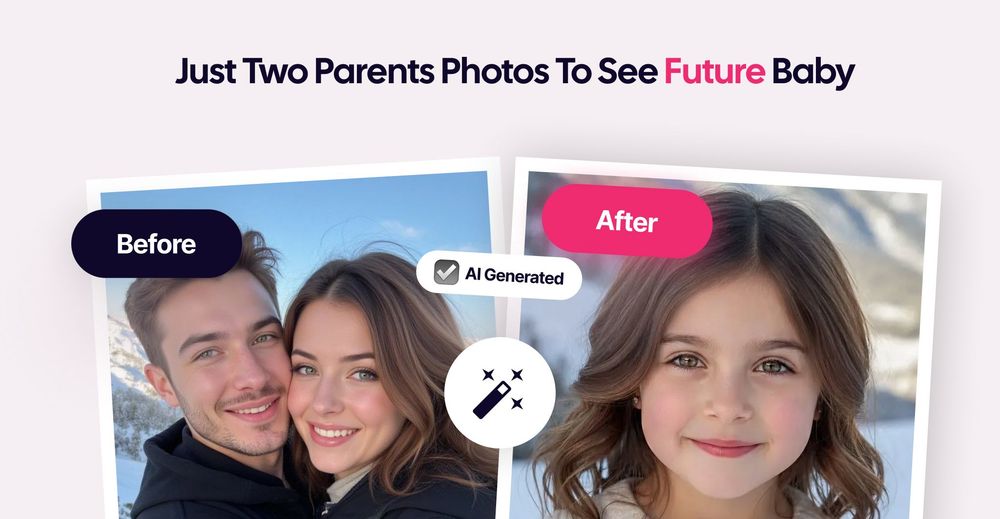
Illustrations are AI-generated
How does baby face generator technology work? How exactly did artificial intelligence manage to combine photos of the parents to produce a cool, realistic photo of their future baby, or even generate its own version of an existing child in the family?
In this article, we'll delve a little deeper into the rather interesting and currently popular technology of generating a child's face based on photographs of their parents. We'll explore why photo quality matters, see real examples of AI predictions, and understand what makes these results so realistic.
Why Two-Parent Photos Matter for Accurate Results
First and foremost, we're interested in the question of why photographs of parents and their quality, as well as their style and appearance, are so important for the final result generated by artificial intelligence.
AI needs data from both parents to produce accurate results. When working with only one parent's photo, the algorithm has access to just half of the genetic information needed.
The algorithm doesn't just merge or morph the photos 50/50—it creates a unique face that resembles both parents naturally. This approach allows artificial intelligence to analyze the smallest features and details of a person's face in a matter of seconds, which is why illustrating these details clearly is very important for generating an image in the right key.
If only one photo is uploaded, the result will be significantly less accurate, as the AI will need to fill in missing information with generic or average features.
How AI Analyzes Facial Features to Generate Baby Faces
Of course, artificial intelligence is a data system that works with photographs in a very specific way. Let's take a closer look at how facial recognition technology works in modern generators of future children.
The Technology Behind Baby Face Prediction
This is essentially an image manipulation technique that involves spatial transformation and facial morphing. The technology analyzes the position and significance of pixels between the two original photographs of the parents and the final result in the form of a generated image of the future child.
AI uses facial recognition and machine learning to examine up to 70+ unique facial characteristics. This technique requires specific points to be defined at which several photos will be morphed into one, and with the help of a self-learning photo generation machine, the neural network already knows exactly which features should be used for morphing. The entire process takes just seconds.
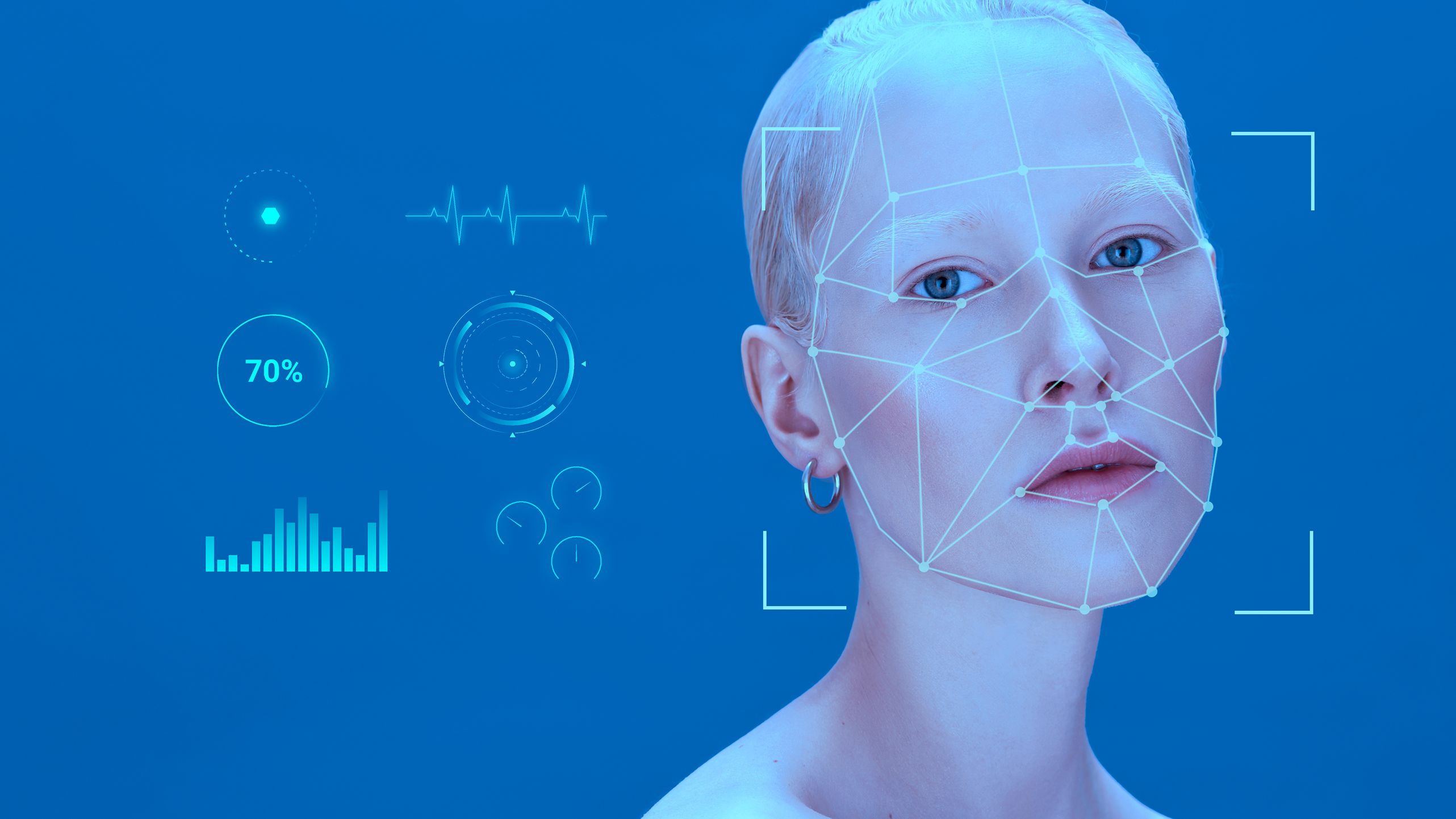
Key Facial Features AI Examines
When analyzing parent photos, artificial intelligence examines these critical features:
- Eye color and shape – analyzing color, shape, and distance between eyes
- Nose structure – width, length, and shape of the nose tip
- Mouth size and lip shape – fullness of lips and mouth width
- Facial structure – overall face shape (oval, round, square)
- Skin tone – skin color and undertones from both parents
- Hair color and texture – natural hair characteristics
- Eyebrow shape – form and thickness of eyebrows
- Chin and jawline – jaw structure and chin shape
- Ears positioning – size and placement of ears
Upload Guidelines: Best Practices for Parent Photos
We have a separate guide on what makes a photo work. The photos added to the generator must be of the highest quality and absolutely clear, not blurred, allowing artificial intelligence to accurately capture the essence of each face—mother's or father's—to analyze the smallest details and combine them in the photo of the child as realistically as possible.
Genetic Traits AI Considers in Baby Prediction
In fact, the artificial intelligence used in baby generators is not designed for deep genetic data research. Naturally, the creation of a human face is an entirely complex process that cannot be fully described technically or algorithmized.
However, AI utilizes a system of morphing parental faces based on current assumptions about the formation and influence of genes from female and male chromosomes on the face of the future child.
Ethnic Heritage and Features
AI analyzes ethnic characteristics from facial features and creates realistic combinations for mixed heritage children. The technology accounts for distinctive features of each ethnic group, ensuring the result reflects the unique heritage of both parents.
Important Disclaimer: AI cannot predict exact genetics—this is an entertainment tool, not a medical assessment. While it provides results that approximate reality, it should never replace professional genetic counseling.
Real Examples: AI Baby Generator Results from Parent Photos
Let's look at real examples of how AI baby generators create realistic predictions from parent photos. These examples demonstrate how the technology blends features naturally.
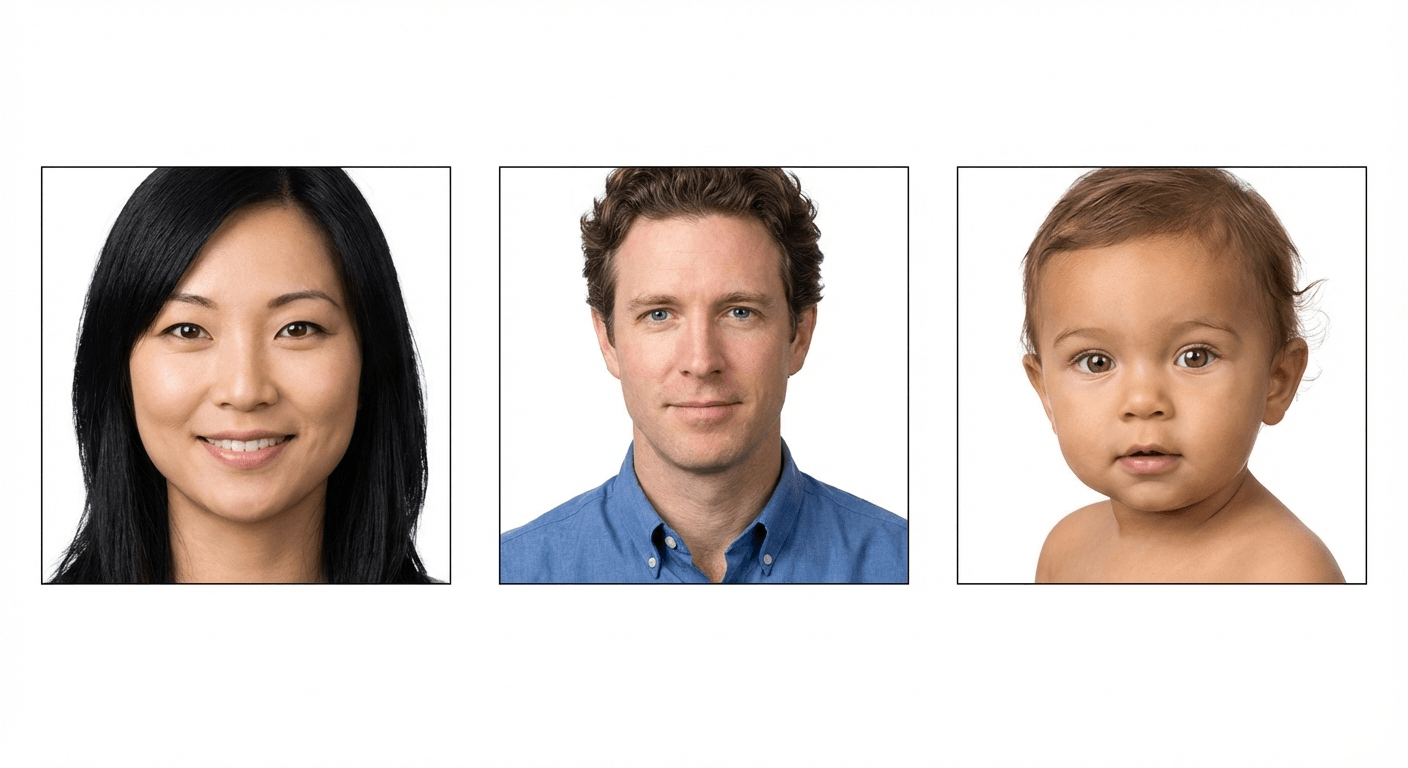
Example 1: Mixed Ethnic Heritage Couple
Parent 1: Asian features, dark eyes, straight black hair
Parent 2: Caucasian features, blue eyes, wavy brown hair
AI Result: Baby with almond-shaped eyes (a natural blend), light brown hair with slight wave, medium skin tone, and mixed facial structure
Notable features: AI successfully combined ethnic characteristics naturally without favoring one parent over the other
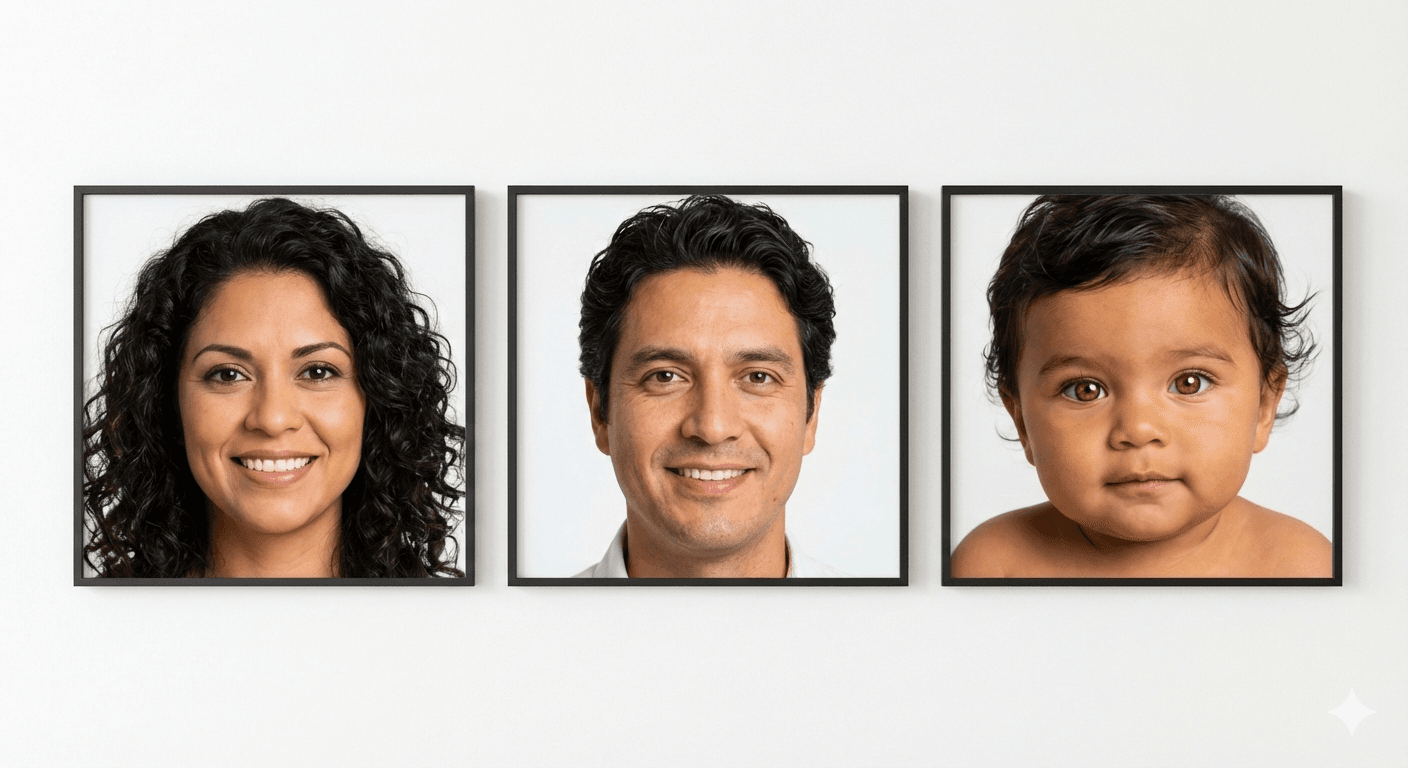
Example 2: Similar Ethnic Background
Parent 1: Latino heritage, dark brown eyes, curly black hair
Parent 2: Latino heritage, brown eyes, wavy dark hair
AI Result: Baby with dark eyes, wavy hair, warm skin tone, showing strong resemblance to both parents
Notable features: Dominant traits clearly expressed, creating a cohesive appearance
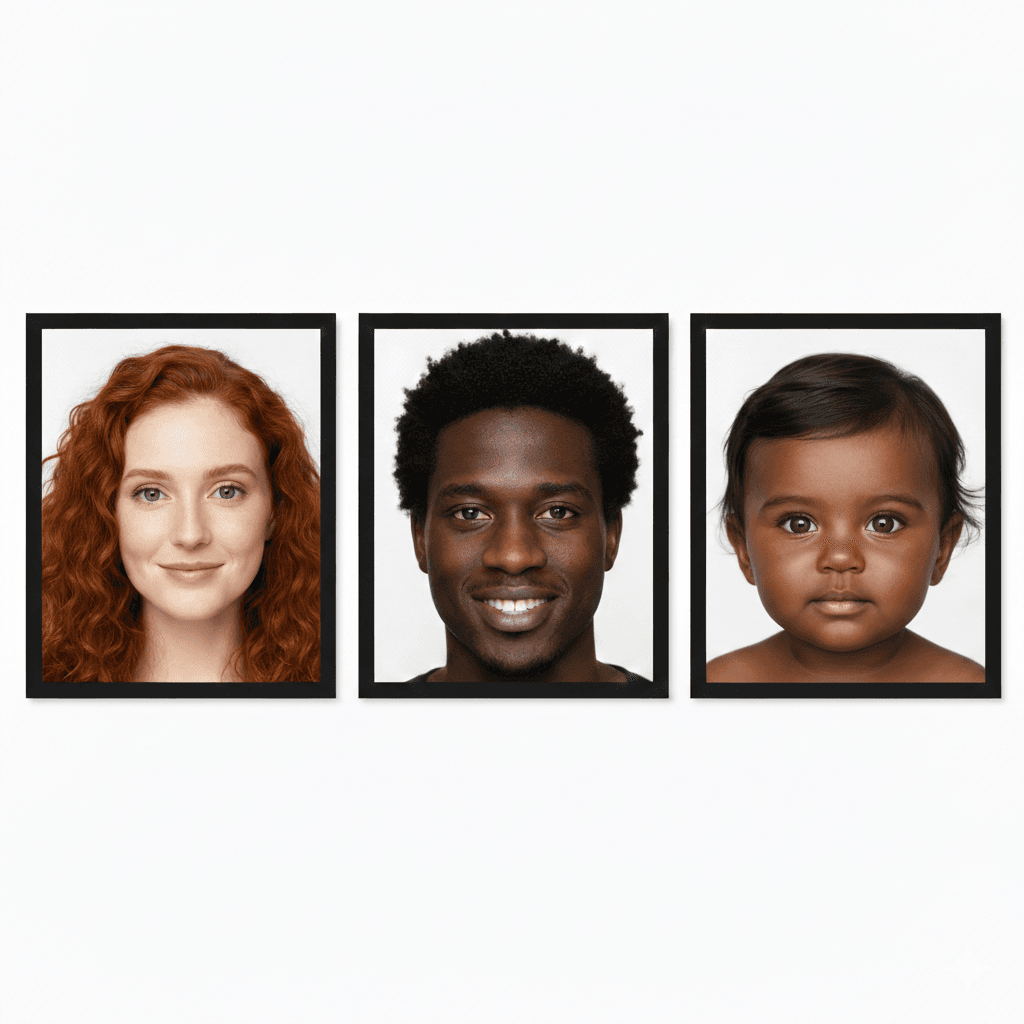
Example 3: Contrasting Features
Parent 1: Fair skin, red hair, green eyes
Parent 2: Dark skin, black hair, brown eyes
AI Result: Baby with light brown skin, dark wavy hair, and hazel eyes
Notable features: Balanced combination showing how AI handles highly contrasting genetics
What Makes AI Baby Predictions Realistic (Understanding Accuracy)
According to surveys ultrasound and AI can even predict the delivery date with an up to 80% accuracy. An AI baby generator does something different: it gives you a likeness drawn from both parents' faces, not a genetic prediction.
The Reality of AI Accuracy
Of course, it's impossible to predict with absolute certainty what your boy or girl will look like using an artificial intelligence service. This is, after all, an entertainment service that offers a version of what could be based on rather superficial genetic research without delving into the essence.
An AI baby generator gives you a likeness, not a genetic prediction. Real genetics is far more complex, involving thousands of genes and interactions. AI bases predictions on patterns, not actual DNA analysis.
Important Note: No photo-based tool can tell you for certain which traits a child will inherit. AI predictions are for entertainment and visualization purposes only and shouldn't replace medical genetic counseling or be used for serious family planning decisions.
Step-by-Step: How to Generate Your Baby from Parent Photos
All we can do is enjoy the generations in an entertaining way. Here's how to use these tools:
- Choose a reliable AI baby generator tool – select a trusted service
- Prepare your parent photos – follow the guidelines above
- Upload parent 1 photo – add the first parent's image
- Upload parent 2 photo – add the second parent's image
- Select baby gender (if available) – choose boy, girl, or both
- Choose age range (if available) – baby, child, or teen
- Click "Generate" – start the AI process
- Wait a few seconds – typically takes 5-20 seconds
- View your results – see the prediction
- Download and share – save your images
By uploading your photos to baby face prediction tools, you can see multiple variations of your potential future child. Most modern generators create both boy and girl versions, giving you a complete picture of possibilities.
Frequently Asked Questions (FAQ)
How accurate is an AI baby generator from parent photos?
An AI baby generator shows a likeness, not a genetic prediction, so there is no accuracy percentage to quote. It's designed for entertainment and visualization, not scientific prediction. Real genetics involves thousands of genes and complex interactions that AI cannot fully replicate.
Can I use just one parent photo instead of two?
Yes, most AI baby generators allow single parent uploads, but accuracy decreases significantly. The AI will combine your features with generic or average features, resulting in less personalized predictions. Two parent photos always yield better results.
Can I generate different ages (baby, child, teen)?
Many AI baby generators offer age options, showing how your potential child might look as a baby, toddler, child, or teenager. This feature helps visualize growth stages, though predictions become less accurate for older ages.
Experience the Magic of AI Baby Prediction Today
AI baby generators from parent photos offer a fun, realistic way to visualize your future child. The technology analyzes facial features from both parents, creating entertainment predictions in seconds. While the results aren't 100% accurate, they provide an exciting glimpse into possibilities.
Our service is primarily intended for inspiring, pleasant, exciting, and immersive future goals. The process is quick, safe, and easy to use—an excellent way for couples to imagine their future together.
Ready to see what your future baby might look like? Upload your parent photos to an AI baby generator and discover realistic predictions in seconds.