
Red Hair Genetics: How Red Hair Is Inherited
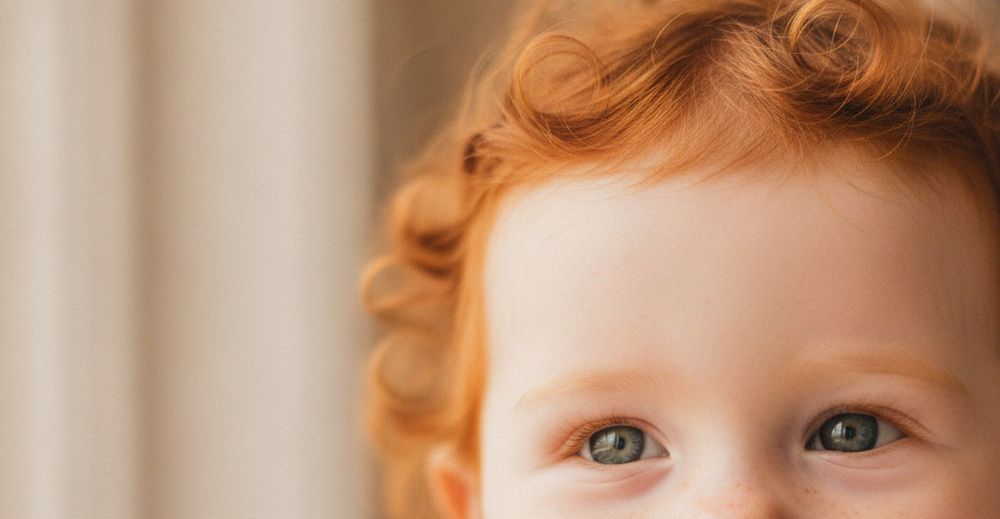
Red hair is the rarest natural hair color, worn by only about 1 to 2 percent of people. Red hair genetics comes down mostly to recessive variants of a gene called MC1R. Because the trait is recessive, a child usually needs two copies, one from each parent, to be born a redhead.
What makes hair red
Your hair color depends on two pigments: dark eumelanin and reddish pheomelanin. The MC1R gene acts like a dial. When it works at full strength, it favors brown and black eumelanin. Certain MC1R variants turn that dial down.
With less eumelanin in the mix, warm pheomelanin takes over. That shift is what paints hair red. The same gene often comes with fair skin and freckles, which is why so many redheads share that pale, sun-sensitive look. If freckles run in your family, you might enjoy our guide on whether freckles are genetic.
How red hair passes from parents to child
Think of the red variant as a recessive card each parent may or may not hold. To make a redhead, a child needs two red cards, one from each parent. Someone with a single red card is a carrier. They usually are not a redhead themselves, but they can still pass the card on.
This is why two dark-haired parents can surprise everyone. If both quietly carry a red variant, neither shows red, yet each can hand a copy to their child. Hair color is really the sum of many genes, but MC1R is the main switch for red.
Can two brunettes have a red-haired baby?
Yes, and it happens more than people expect. This is the classic hidden-recessive surprise. Both parents carry a red variant without showing it, so red seems to appear from nowhere. That is also why red hair can skip a generation, then pop up again in a grandchild.
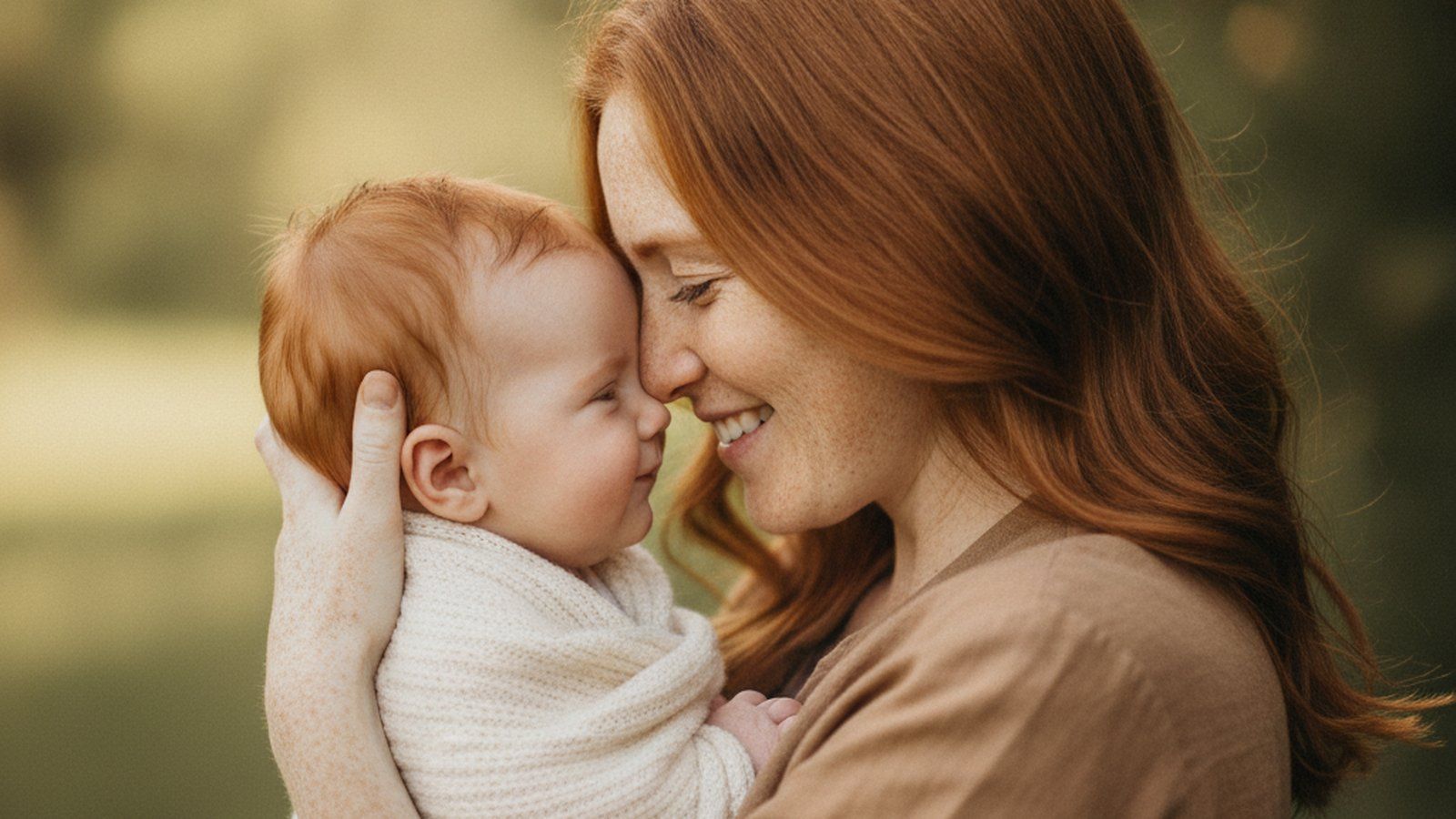
The odds, in plain words
The math is simpler than it sounds. A few common cases:
- Both parents are redheads: the child is very likely to have red hair, since both pass on red variants.
- Both parents are carriers: roughly a one in four chance of a red-haired child, with about half the kids becoming carriers themselves.
- Only one parent carries it: no red-haired baby from that pairing alone, though the child may become a carrier.
Red also tends to cluster in family lines, so a strong red streak among relatives raises the odds. For a wider look at how these patterns work, see our piece on dominant and recessive traits.
Will the red stay red?
Red covers a wide range, from soft strawberry blonde to warm auburn to deep copper. Many children start bright and deepen with age, so a coppery toddler may turn a richer shade by their teens.
Red pigment is also stubborn. It tends to hold its warmth and resist fading longer than other colors, though sun and time still soften it.
Curious what your future child might look like? Try our baby generator to preview possible hair colors.
A few true redhead extras
Two small facts worth knowing. Some research suggests redheads may respond differently to certain anesthetics, so it is a fair thing to mention to a doctor. And that fair, freckled skin burns quickly, which makes daily sun care a smart habit from an early age.
FAQ
Can two non-redheads have a red-haired baby?
Yes. If both parents carry a recessive red variant without showing it, each can pass a copy on, and their child can be a redhead even though neither parent is.
Is red hair dominant or recessive?
Red hair is recessive. A child generally needs two red MC1R variants, one from each parent, before the red actually shows in their hair.
Does red hair skip a generation?
It can appear to. When the red variant is passed down quietly by carriers who are not redheads, red can stay hidden for a generation and then reappear in a later child.
Will my baby's red hair stay red?
Usually it stays in the red family, though the shade may shift. Many redheads darken from bright copper toward auburn with age, and red pigment resists fading better than most colors.
Genetics offers the odds, not a promise, and that mix of chance is part of the fun of meeting your baby.