
Are Freckles Genetic? What Parents Should Know
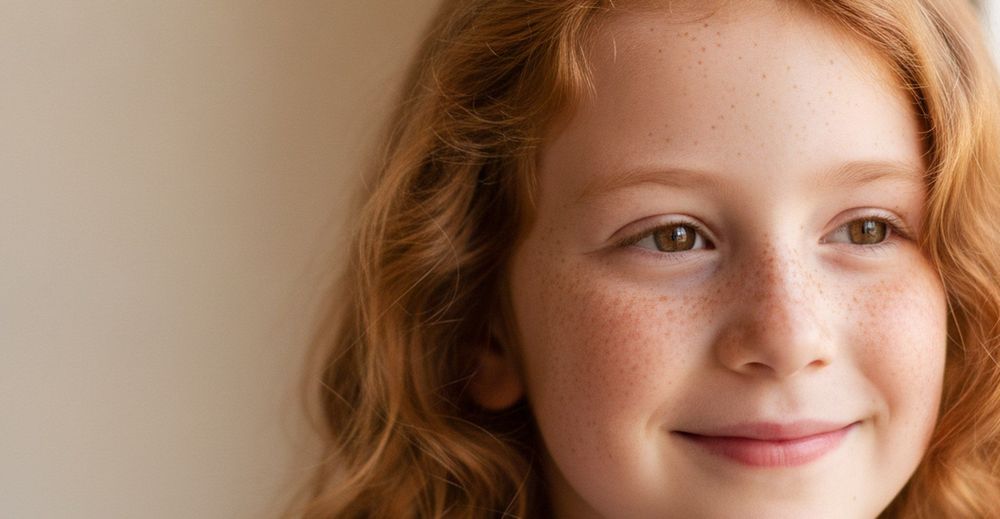
Illustrations are AI-generated
Yes, freckles are largely genetic. The biggest driver is a gene called MC1R, the same gene tied to red hair and fair skin, and freckles often run in families. But genes only set the stage. Sun exposure is what switches freckles on, which is why they show up and darken in summer. So the honest answer to "are freckles genetic" is: mostly nature, with a strong push from nurture.
What freckles actually are
A freckle is a small cluster of melanin, the pigment that gives skin its color. When certain skin cells make extra melanin in one tiny spot, you get a freckle instead of an even tan.
There are two common types, and it helps to keep them straight. Ephelides are the classic freckles: flat, light-brown, often on the nose and cheeks, and they fade in winter. Solar lentigines, sometimes called sun spots or age spots, are darker, show up later in life, and stay put year-round. When people ask about inherited freckles, they almost always mean ephelides, the childhood kind.
The genetics: why MC1R matters
The star of the story is a gene called MC1R. It helps decide which type of melanin your skin makes. Some MC1R variants shift production toward the reddish pigment and away from the brown pigment that tans evenly, and that combination gives you fair skin, a tendency to burn, sometimes red hair, and freckles.
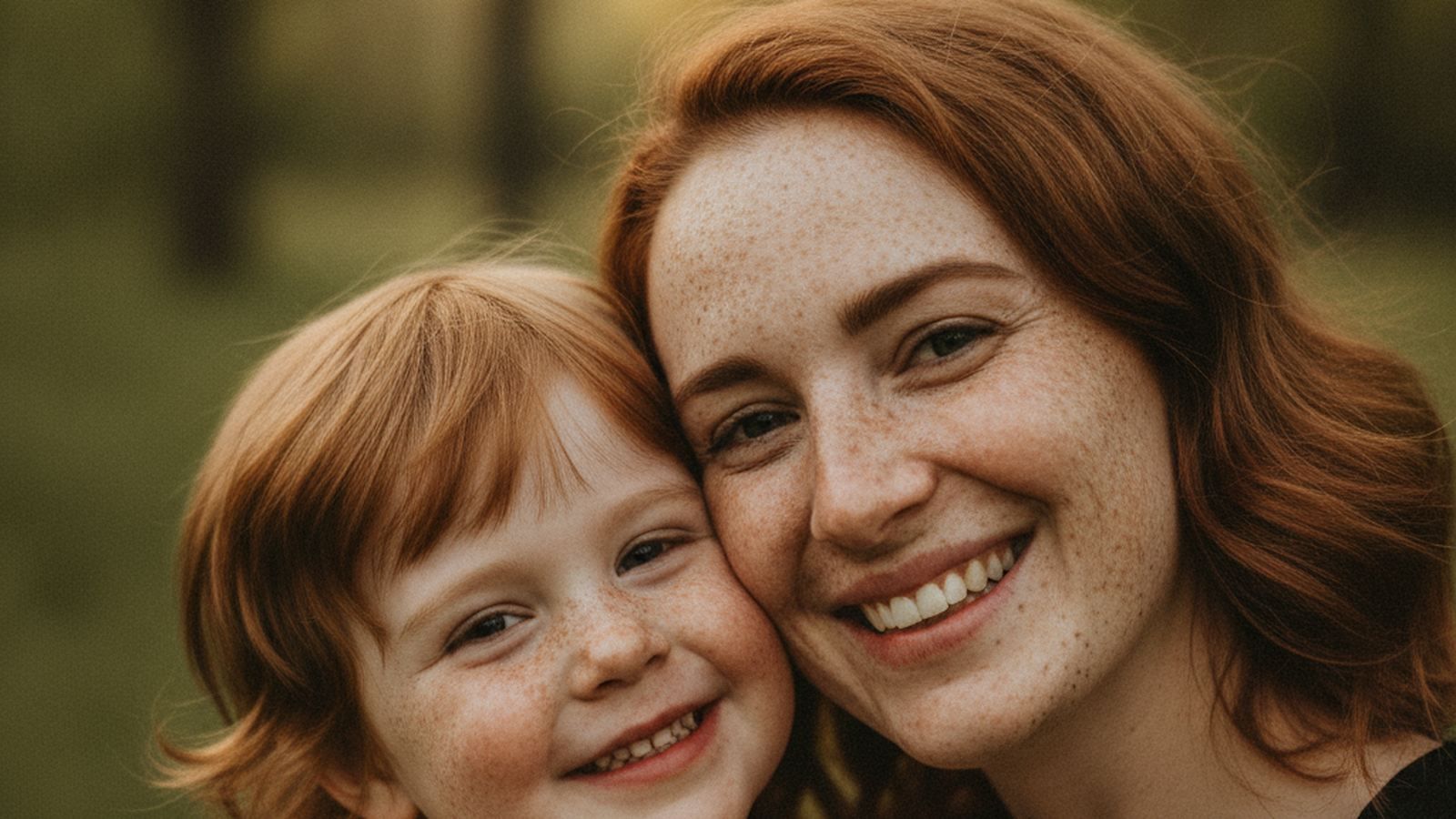
Because these traits share a genetic root, they travel together. If a parent has red or strawberry-blond hair, pale skin, and freckles, MC1R variants are likely in the mix, and there is a real chance a child inherits the same pattern. This is why freckles run in families so visibly.
Can a child have freckles when neither parent does? Yes, and it is more common than you might expect. MC1R works in a partly recessive way, so two parents can each carry a freckle-linked variant quietly, show few freckles themselves, and still pass the combination to a child who freckles readily.
This skip-a-generation pattern is a classic case of dominant and recessive traits at work. It also explains the variable expression: the same genes can look strong in one sibling and faint in another.
Nature loads the gun, sun pulls the trigger
Here is the part that trips people up. You can carry every freckle gene there is and stay clear-skinned if you never see much sun. Genes create the potential; ultraviolet light turns it into visible spots.
That is why freckles often appear during a child's first sunny summers, deepen with each bright season, and fade over winter. Many people also notice their freckles soften in adulthood as sun habits change. The gene sets the potential; the season decides whether you ever see it.
Will my baby have freckles?
There is no way to predict this for certain, but heredity gives you decent clues. If both parents freckle, the odds are fairly high. If one parent freckles, the chance is moderate. If neither does, it is lower but not zero, thanks to those quiet recessive combinations.
Hair and skin tone are useful signals too. Fair skin, light or red hair, and a family history of freckling all point toward a freckle-prone baby. Darker skin tones freckle less often, though it still happens.
Freckles are just one such feature, and something like whether a baby has dimples follows its own inheritance pattern in the same way. Treat these all as odds, not a forecast, because the same handful of genes can play out differently from child to child.
Are freckles a health concern?
Freckles themselves are harmless. They are a cosmetic trait, not a disease, and there is nothing to treat or fix.
The thing worth watching is the skin they come with. Freckle-prone skin, the fair, MC1R type, burns easily and is more sensitive to sun damage over a lifetime. So the practical takeaway is not about the freckles, it is about protection: shade, hats, and sunscreen matter more for this skin type. This is general information, not medical advice, and any changing or unusual spot is worth showing a doctor.
FAQ
Can two parents without freckles have a freckled child?
Yes. Freckle-linked MC1R variants can be carried recessively, so two parents with few or no freckles can still pass on the combination that gives a child freckles.
At what age do freckles appear?
Usually in early childhood, often around ages two to five, once a child starts getting regular sun. They tend to multiply and darken through sunny seasons.
Do freckles go away?
Ephelides, the common childhood freckles, often fade in winter and may soften in adulthood. They are not permanent the way a mole is. Sun spots that appear later in life behave differently and tend to stay.
Are freckles the same as moles?
No. Freckles are flat clusters of extra melanin driven mostly by sun and genes. Moles are raised or flat growths of pigment cells and follow their own biology, so the two are not the same.
Freckles are a small, friendly example of how genetics and environment team up to shape a face. If you are curious which features your child might inherit, preview your future baby and see the predicted traits for yourself.