
Ramzi Theory: Guessing Baby's Sex Early From a Scan

Illustrations are AI-generated
The Ramzi theory says you can guess your baby's sex as early as six weeks by checking which side the placenta is forming on. Placenta or bright chorionic villi on the mother's right? That is read as a boy. On the left? A girl. It is a fun, unofficial early guess passed around pregnancy forums, not a medical fact your doctor will confirm.
So treat it as a game. Below is what the claim actually says, the one detail that trips up almost everyone who tries it, and the tests that really tell you.
What the Ramzi theory claims
The idea comes from a self-published study by a researcher using the name Saad Ramzi Ismail. The claim: on a scan from around six weeks, the developing placenta and the mass of chorionic villi that feeds it already sit slightly to one side. Right side means boy. Left side means girl.
The placenta is easy to spot on an early scan. It shows up as a bright, thick patch of tissue along the wall of the uterus, brighter than the dark sac around the embryo. Ramzi tied the side that patch leans toward to the baby's sex. That is the whole theory in one sentence.
The detail almost everyone gets wrong
Here is the catch that sinks most home readings: left and right depend on how the scan was taken and how the clinic labels the image.
A transvaginal scan (the internal probe used very early) shows the image the true way round. Your right is the right of the picture. A transabdominal scan (the probe on your belly) is often mirrored, so the picture's right is really your left. Same pregnancy, same placenta, opposite answer.
Clinics also flip and rotate images differently, and the marker showing orientation is easy to miss. Unless you know the scan type and how that specific image is oriented, "right side" and "left side" are basically a coin toss. This single point is why so many DIY Ramzi guesses turn out wrong, and why most tutorials online quietly skip it.
When people try it
Timing is the theory's main selling point. People apply it at six to eight weeks, during the earliest dating scans. That is weeks before the nub theory, which needs a clearer profile view around twelve to fourteen weeks, and long before anyone can measure anatomy. Only the Chinese gender chart claims to answer sooner, and it asks for no scan at all — just the mother's birthday and the month of conception.
That early window is the appeal. It is also part of the problem. At six weeks there is very little to see, and a smudge of tissue is easy to misjudge.
Does the Ramzi theory actually work?
Short version: nobody has proven it does. The original study reported a high hit rate, but it was small, self-published, and never reliably repeated by independent researchers. Mainstream medicine does not recognize the Ramzi theory, and no major obstetric body endorses placenta position as a sex predictor.
Could you land on the right answer? Sure. With two options, a pure guess is right half the time anyway. That is the honest frame: fun, unproven, low reliability. Enjoy it as entertainment, and do not treat a match as proof. If you like separating the myths from what actually holds up, this walk through common gender-prediction myths versus the science covers the popular ones.
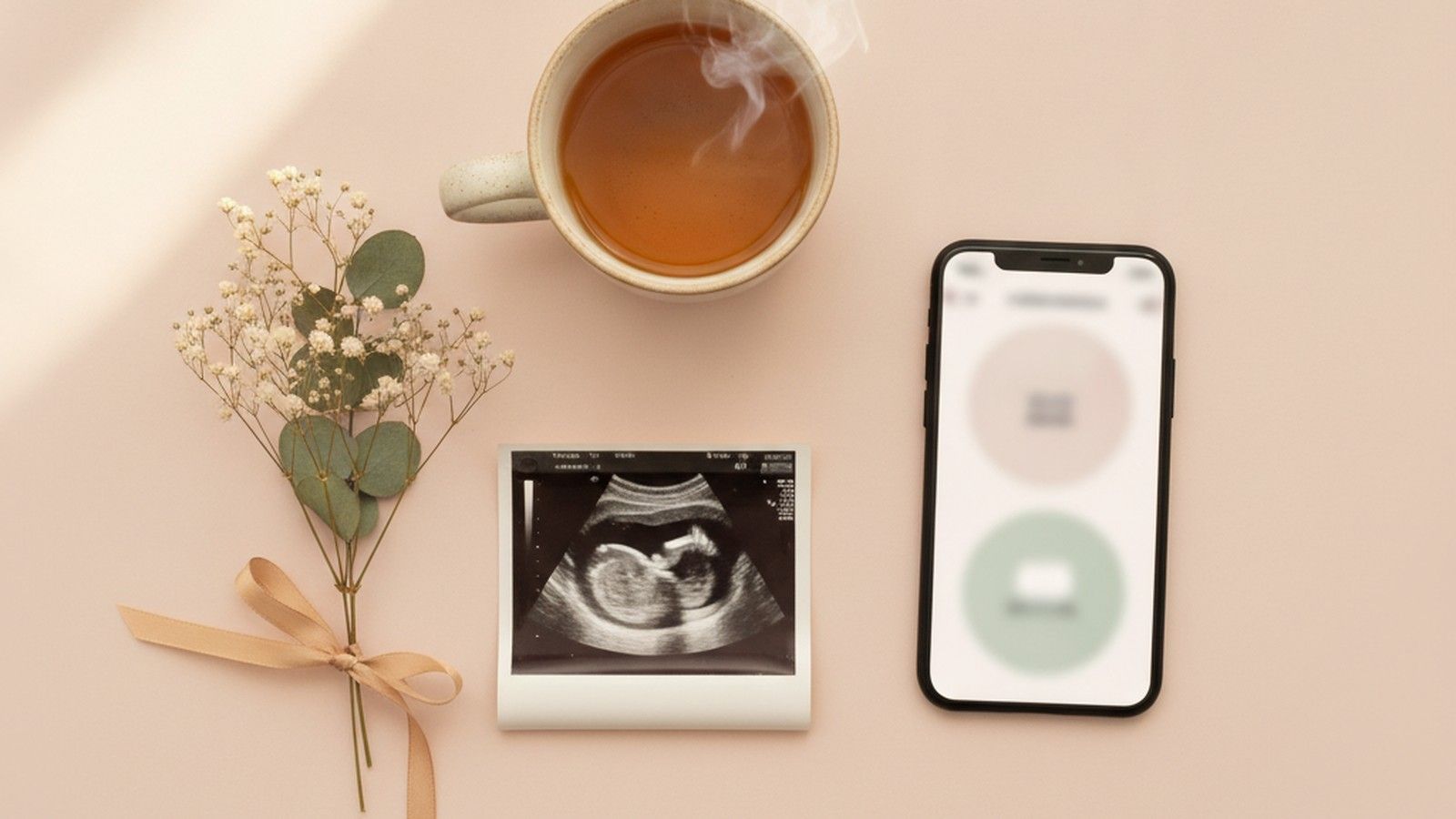
How people read their own early scan
If you want to try it for fun, here is the usual approach:
- Find the placenta or the bright villi mass, the thick glowing patch along the uterine wall, not the dark sac.
- Note which side of the frame it leans toward, left or right.
- Check the scan type. Transvaginal is usually shown true; transabdominal is often mirrored.
- Adjust for that orientation before you call a side, and look for any left/right marker on the image.
Do all that and you still might be reading it backwards, because orientation is genuinely hard to confirm from a printout. That is the honest limit. A guess built on a mirrored image is no better than flipping a coin.
What actually confirms the sex
Two tests give you a real answer:
- NIPT blood test, from about ten weeks. It reads fragments of the baby's DNA in the mother's blood and reports sex with high accuracy. It also screens for certain chromosomal conditions.
- The anatomy scan, around twenty weeks. A sonographer looks directly at the anatomy. This is the standard confirmation, and by then the view is clear.
If you genuinely need to know, these are the answers. The Ramzi theory is the appetizer people snack on while they wait.
A caution before you plan anything
Two reminders worth keeping. First, a scan shows biological sex, not gender, which is a separate thing your child grows into. Second, never make a hard-to-undo decision on an early guess. Do not paint the nursery, order the banner, or announce anything based on placenta position alone.
Keep it light. A wrong guess makes a funny story later, as long as no real plans were riding on it. When you do want to celebrate, these gender reveal party ideas made better with AI are a nicer place to spend the excitement than a coin-flip scan reading.
FAQ
How early can the Ramzi theory be used?
From around six weeks, at the earliest dating scans. That is its main draw, since it comes weeks before the nub theory or the anatomy scan. The trade-off is that so little is visible that early, and the guess is shaky.
Is the Ramzi theory accurate?
There is no solid proof. The original study claimed a high success rate but was small and never reliably reproduced, and no major medical body backs it. Realistically it is a fifty-fifty guess dressed up as a method.
Why do people get different Ramzi results from the same scan?
Almost always because of orientation. A transabdominal image is usually mirrored while a transvaginal one is not, so the same placenta can look left or right depending on the scan and how the clinic labels it.
What is the difference between Ramzi and nub theory?
Timing and what they look at. Ramzi reads placenta side at six to eight weeks. Nub theory reads the angle of the genital tubercle around twelve to fourteen weeks. Both are for fun; neither replaces NIPT or the anatomy scan.
Curious in the meantime? You can picture your future baby's face with our AI generator while you wait for a test that actually settles it.