
Nub Theory: Guessing Baby Sex From an Early Ultrasound
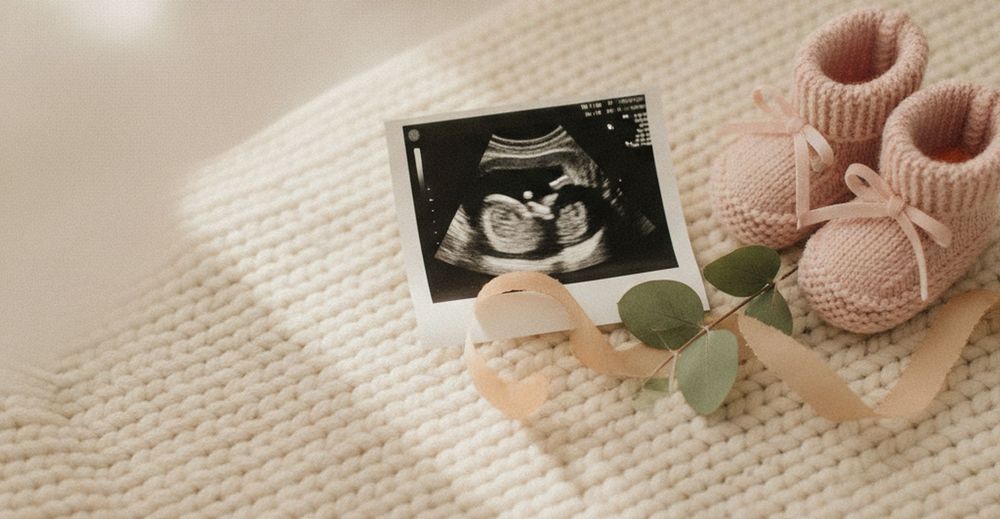
Nub theory is a way that parents and online forums try to guess a baby's sex from a 12-week ultrasound. It looks at the angle of the genital tubercle, a small bump often called the "nub," measured against the baby's spine on a side-on profile shot.
The rule is simple. A nub that tilts up and away from the spine is read as a boy. A nub that sits flat, close to parallel with the spine, is read as a girl. That is the whole idea in two lines.
It is worth being blunt up front: this is an unofficial guess, not a diagnosis. Sonographers do not use nub theory to report sex, and it is not part of any medical record. People enjoy it because the 12-week scan happens long before most parents get an official answer, and the wait is hard. Treat it as a bit of fun while you wait for something reliable.
What the "angle of the dangle" actually means
The genital tubercle is an early structure that later becomes either a penis or a clitoris. At around 11 to 13 weeks, it has not finished developing, so in both sexes it looks like a small nub near the base of the spine. The trick people use is the angle it makes.
Draw an imaginary line along the lower spine. Now look at the nub:
- Angled more than 30 degrees up from that spine line is read as a boy.
- Roughly flat, sitting below about 10 to 30 degrees, close to parallel, is read as a girl.
This is the "angle of the dangle." It sounds precise, but measuring a small structure on a moving fetus is fiddly, and a few degrees either way flips the guess. The angle also becomes clearer as the pregnancy moves along, which is why timing matters so much.
Why timing and image quality decide everything
Before about 12 weeks, the tubercle in boys and girls looks almost the same, so a guess made too soon is close to a coin toss. Sonographers often track gestational age with crown-rump length, the measurement from the top of the head to the bottom of the torso. A longer crown-rump length means a more developed nub and a more readable angle.
You also need a clean shot. A useful nub reading depends on:
- A mid-sagittal profile view, meaning a straight side-on picture of the baby lying flat, not tilted toward or away from the camera.
- A clear, still moment. Babies wriggle, and a blurry frame hides the angle.
- The spine and the nub both visible in the same line, so you have a baseline to measure against.
If the baby is curled up, facing down, or caught mid-move, the "nub" you think you see may be a leg, the cord, or a shadow. Wrong-angle and blurry scans are the main reason guesses miss.
How accurate is nub theory?
Here is the honest version. Researchers have looked at nub theory, and reported accuracy ranges vary a lot between studies. The pattern they agree on is the useful part: accuracy is poor before 12 weeks and climbs with gestational age and image quality. In a crisp, well-timed profile shot after 12 weeks, experienced readers get it right far more often than chance. In an early or blurry scan, the guess is barely better than flipping a coin.
So do not anchor to a single headline percentage. The takeaway is directional. A good nub shot after 12 weeks is a fair guess, not proof, and confidence should rise or fall with the quality of the image in front of you. If you want certainty, you need a test built for it.
Reliable ways to confirm sex
Two methods actually confirm sex, and both beat any ultrasound-angle trick:
- NIPT (non-invasive prenatal testing). This is a blood test from the parent, available from around 10 weeks. It screens for chromosome conditions and can report the baby's sex with very high accuracy by detecting sex chromosomes in the blood.
- The anatomy scan at around 20 weeks. By this point the anatomy is developed enough for a sonographer to see it directly, so the reported sex is dependable when the baby cooperates.
Nub theory sits below both. It is a fun early hint; NIPT and the 20-week scan are the confirmations you plan around. If you are curious how folklore stacks up against evidence in general, our guide on gender prediction myths versus science walks through the popular ones.
How to find the nub on your own scan photo
Want to hunt for it on your own 12-week picture? Here is a simple order:
- Find the profile. Look for the clear side-on shot where you can trace the head, back, and bottom in one line. That is the mid-sagittal view.
- Use the spine as your baseline. Follow the bright chain of the spine down toward the tailbone.
- Locate the nub at the base. Right at the end of the spine, look for a small raised bump. That is the genital tubercle.
- Judge the angle. Compare the nub's direction to the spine line. Tilted up and away leans boy; lying flat leans girl.
Remember that even sonographers hedge on this, so a fuzzy photo is not a verdict. If the profile is not clear, you have not found a reliable nub, and no amount of zooming changes that.
Keep it in perspective
Nub theory is entertainment. It is a way to pass the weeks and share a hunch with people you love, nothing more. A few honest reminders:
- Sex is not gender. A scan angle describes early anatomy, not who your child will grow up to be.
- Never make irreversible plans on a guess. Do not paint the room, buy the wardrobe, or announce the news on a nub alone. Wait for a test.
- A wrong guess is not a loss. Half of all nub calls are wrong by definition when the image is poor, so hold it loosely.
If you love the anticipation, lean into the fun side of it. Borrow one of these gender reveal party ideas for the day you finally get a confirmed answer.
FAQ
Can nub theory be done before 12 weeks?
You can look, but the guess is unreliable. Before about 12 weeks the genital tubercle looks similar in boys and girls, so early readings are close to a coin toss. Accuracy improves with gestational age.
Is nub theory as accurate as NIPT?
No. NIPT is a blood test that detects sex chromosomes and reports sex with very high accuracy from around 10 weeks. Nub theory is a visual guess from an ultrasound angle, and its accuracy swings with timing and image quality.
What does a "boy nub" look like?
On a clear side-on profile, a nub read as a boy tilts up and away from the spine at more than about 30 degrees. A nub read as a girl lies closer to flat, roughly parallel with the spine. A few degrees can flip the call, so the image has to be sharp.
My sonographer would not guess the sex. Why?
Because nub theory is not a medical method. Sonographers report sex only when they can see it clearly, usually at the 20-week anatomy scan, or they point you to NIPT. Declining to guess from a nub is good practice, not a brush-off.
Nub theory turns the long wait after your first scan into a game, and there is real joy in that. Just keep the stakes low: enjoy the guessing, confirm with NIPT or the anatomy scan, and in the meantime you can picture your future baby's face with an AI baby portrait for the fun of it.